Introduction
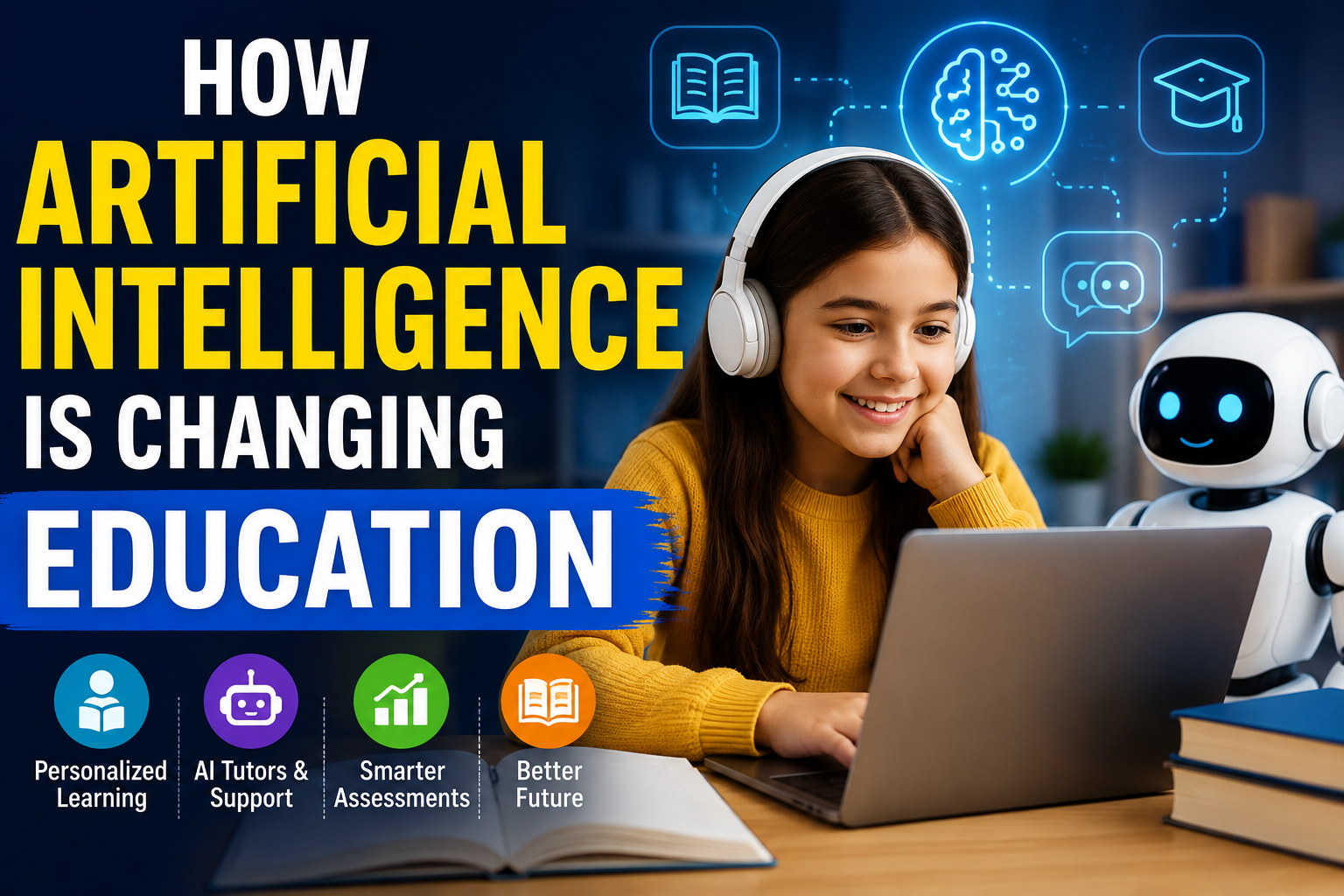
Education has always adapted to new technologies. From printed books to computers and online classrooms, each innovation has changed how students learn and how teachers teach. Today, Artificial Intelligence (AI) is becoming one of the most influential technologies in the education sector.
AI is no longer something that belongs only in tech companies or research labs. It has entered classrooms, learning apps, and educational platforms, helping students learn more effectively and making teaching more efficient. As AI continues to develop, it is creating opportunities that could transform education for future generations.
What Is Artificial Intelligence in Education?
Artificial Intelligence is technology that enables computers and software to perform tasks that normally require human intelligence. These tasks include understanding information, learning from experience, recognizing patterns, and making recommendations.
In education, AI is used to create smarter learning systems that can understand students’ needs and provide support based on their individual progress. Instead of offering the same experience to every learner, AI helps make education more flexible and personalized.
Learning Designed for Individual Students
One of the biggest advantages of AI is its ability to adapt learning materials to each student. In a traditional classroom, teachers often have to teach many students at once, making it difficult to address every learner’s specific needs.
AI-powered learning platforms can analyze a student’s performance and identify areas where they may need additional practice. If a student struggles with a topic, the system can provide extra exercises or alternative explanations. If a student learns quickly, the platform can introduce more advanced content.
This personalized approach helps students learn more efficiently and stay motivated throughout their educational journey.
Smart Tutors Available Anytime
Many students face challenges when studying alone. They may have questions that arise outside school hours or struggle to understand complex topics without guidance.
AI-powered tutoring systems offer a solution by providing instant assistance whenever needed. These virtual tutors can answer questions, explain difficult concepts, and provide step-by-step guidance.
Since these tools are available at any time, students can continue learning whenever it suits their schedule, making education more convenient and accessible.
Reducing Teachers’ Workload
Teaching involves much more than standing in front of a classroom. Teachers spend a significant amount of time grading assignments, preparing lesson plans, and managing student records.
Artificial Intelligence can help automate many of these repetitive tasks. Automated grading systems, attendance tracking tools, and performance analysis software allow teachers to complete administrative work more efficiently.
As a result, educators can dedicate more time to helping students, improving lessons, and creating a better classroom environment.
Making Education Accessible to More People
AI is helping break down barriers that have traditionally limited access to education. Students with disabilities, language differences, or learning difficulties can benefit from AI-powered tools designed to support their specific needs.
Examples include:
- Text-to-speech software for visually impaired learners
- Speech recognition tools for students who have difficulty writing
- Real-time translation services for multilingual classrooms
- Automated captions for educational videos
These technologies help create a more inclusive learning environment where every student has the opportunity to succeed.
The Impact of AI on Online Learning
Online education has become increasingly popular, and AI has played a major role in improving digital learning experiences.
Modern educational platforms use AI to track student engagement, recommend relevant courses, and provide personalized feedback. By understanding how students interact with content, AI can suggest resources that match their learning goals and abilities.
This level of personalization makes online learning more effective and engaging than ever before.
Creating Better Learning Resources
Developing educational content can be a time-consuming process. AI is helping teachers and institutions create high-quality learning materials more quickly.
AI tools can generate quizzes, practice exercises, study guides, and lesson summaries within minutes. This saves valuable time while ensuring students have access to a variety of learning resources.
Teachers can then focus more on teaching and less on repetitive content creation tasks.
Using Data to Improve Education
Every day, schools and educational platforms collect valuable information about student performance. AI can analyze this data to identify patterns and provide useful insights.
For example, AI can help schools:
- Detect students who may need extra support
- Evaluate the effectiveness of teaching methods
- Improve curriculum planning
- Monitor academic progress more accurately
These insights allow educators to make informed decisions that benefit both students and institutions.
Challenges That Need Attention
Although AI offers many benefits, there are still challenges that need to be addressed.
Protecting Student Data
AI systems often rely on large amounts of information. Educational institutions must ensure that student data is stored securely and used responsibly.
Technology Gaps
Not every student has access to reliable internet connections or modern devices. This digital divide can prevent some learners from benefiting from AI-powered education.
Maintaining Human Interaction
Technology can support education, but it cannot replace the human connection between teachers and students. Encouragement, empathy, and personal guidance remain essential parts of the learning experience.
Financial Limitations
Implementing advanced AI technologies can be expensive, especially for schools with limited budgets and resources.
The Future of Education with AI
The role of Artificial Intelligence in education is expected to grow significantly in the coming years. Future innovations may include intelligent career advisors, advanced virtual learning environments, and highly personalized educational experiences tailored to each learner’s goals.
Rather than replacing educators, AI will likely become a powerful tool that helps teachers deliver better instruction and helps students achieve their full potential.
As technology continues to evolve, education will become more flexible, accessible, and effective than ever before.
Conclusion
Artificial Intelligence is changing education in remarkable ways. It is helping students receive personalized support, allowing teachers to work more efficiently, and making learning accessible to people from different backgrounds and abilities.
While concerns about privacy, accessibility, and technology dependence remain important, the positive impact of AI on education is already visible around the world. As educational systems continue to embrace innovation, Artificial Intelligence will play a key role in creating smarter classrooms, better learning opportunities, and a brighter future for students everywhere.
The future of education is not just digital—it is intelligent, adaptive, and focused on helping every learner succeed.
