Introduction
The world is changing rapidly, and education is changing along with it. Over the last decade, technology has transformed the way people communicate, work, and access information. By 2030, these changes are expected to have an even greater impact on classrooms and learning environments around the globe.
The future of education is not simply about replacing books with computers. It is about creating smarter, more flexible, and more effective ways for students to learn. Schools will focus on preparing learners for a future where adaptability, creativity, and digital skills are just as important as academic knowledge.
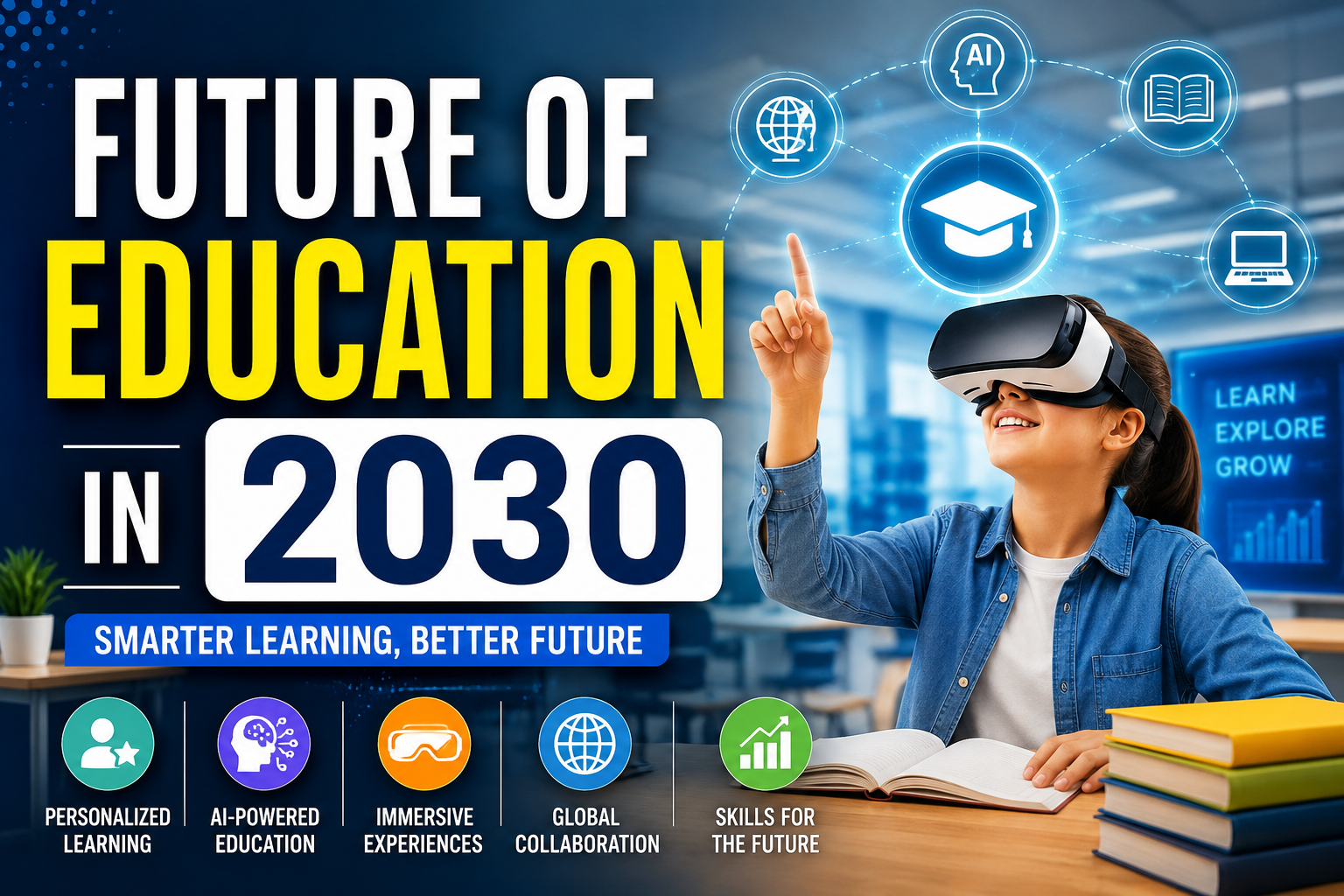
As we approach 2030, education is set to become more personalized, technology-driven, and accessible than ever before.
Students Will Learn in Different Ways
For many years, education has followed a traditional model where all students study the same subjects in the same way. However, not every student learns at the same pace or has the same interests.
In the future, learning experiences will be tailored to individual needs. Advanced educational platforms will help identify how each student learns best and adjust lessons accordingly. Students who excel in certain subjects can move ahead more quickly, while others can receive extra support when needed.
This personalized approach will help learners stay engaged and make education more effective for everyone.
Technology Will Become a Core Part of Education
Technology is expected to play a central role in classrooms by 2030. Digital tools will help students access information, complete assignments, and interact with educational content in ways that were not possible before.
Artificial intelligence will assist both students and teachers. Learners may receive instant feedback on their work, while teachers can use data to understand student performance and improve lesson planning.
Rather than acting as a replacement for educators, technology will serve as a powerful support system that enhances the overall learning experience.
Classrooms Will Be More Engaging
One challenge educators often face is keeping students interested in lessons. Future technologies may help solve this problem by making learning more interactive and immersive.
Virtual Reality and Augmented Reality can transform ordinary lessons into exciting experiences. Students may explore historical locations, observe scientific processes, or visit distant parts of the world without leaving their classrooms.
These technologies can improve understanding by allowing learners to experience concepts instead of simply reading about them.
Education Will Not Be Limited by Location
By 2030, geographical barriers to learning may become less important. Online education platforms already allow students to learn from experts around the world, and this trend is expected to continue growing.
Students will have access to a wider range of courses, resources, and instructors regardless of where they live. Whether someone lives in a major city or a remote village, quality education may become more accessible through digital platforms.
This increased accessibility has the potential to create more equal learning opportunities worldwide.
Skills for the Future Workforce
The workplace of 2030 will require a different set of skills than many jobs require today. As automation and artificial intelligence continue to grow, employers will value abilities that machines cannot easily replicate.
Some of the most important future skills include:
- Critical thinking
- Creative problem-solving
- Communication
- Collaboration
- Leadership
- Emotional intelligence
- Digital literacy
- Adaptability
Educational institutions will increasingly focus on helping students develop these practical skills alongside traditional academic subjects.
Lifelong Learning Will Become Essential
The idea that education ends after graduation is becoming outdated. In a rapidly changing world, learning must continue throughout life.
New technologies, industries, and career opportunities will require people to update their knowledge regularly. Short online courses, professional certifications, and specialized training programs will become common tools for career development.
Lifelong learning will help individuals stay competitive and prepared for future opportunities.
Global Connections Will Shape Learning
Modern technology makes it easier than ever for people from different countries to communicate and collaborate. Future classrooms will likely reflect this reality.
Students may work on projects with peers from other nations, attend virtual international workshops, and participate in global discussions. These experiences can help learners understand different cultures and develop a broader perspective of the world.
Such global exposure will be increasingly valuable in an interconnected economy.
Teachers Will Continue to Make a Difference
Despite advances in technology, teachers will remain one of the most important parts of education. While digital tools can provide information, they cannot replace human understanding, encouragement, and mentorship.
The role of educators may evolve from delivering information to guiding students through their learning journeys. Teachers will help learners develop critical thinking skills, build confidence, and apply knowledge in meaningful ways.
Human interaction will continue to be a key ingredient in successful education.
Challenges on the Road Ahead
Although the future of education offers many opportunities, several challenges must be addressed.
Access to Technology
Many students still lack reliable internet access or modern devices. Closing this gap will be necessary to ensure equal opportunities.
Data Privacy
As more educational activities move online, protecting student information will become increasingly important.
Teacher Training
Educators must be equipped with the skills needed to use new technologies effectively.
Educational Equality
Policymakers and institutions must work to ensure that all students benefit from innovation, regardless of their background or economic status.
Successfully addressing these challenges will help create a more inclusive and effective education system.
Conclusion
The future of education in 2030 promises exciting possibilities for learners around the world. Personalized learning, artificial intelligence, virtual reality, and online education are expected to transform how knowledge is delivered and experienced.
At the same time, schools will place greater emphasis on creativity, critical thinking, communication, and lifelong learning. While technology will continue to shape education, the guidance of teachers and the curiosity of students will remain at the heart of the learning process.
As education evolves, it will become more flexible, accessible, and focused on helping individuals succeed in a rapidly changing world. The classrooms of 2030 may look very different from those of today, but their purpose will remain the same: empowering people with the knowledge and skills needed to build a better future.
