Introduction
The definition of education is changing. In the past, success in academics was often measured by grades, test scores, and degrees. While these factors still matter, they are no longer enough on their own. Today, employers and industries are looking for people who can apply knowledge, solve real problems, and adapt to new situations.
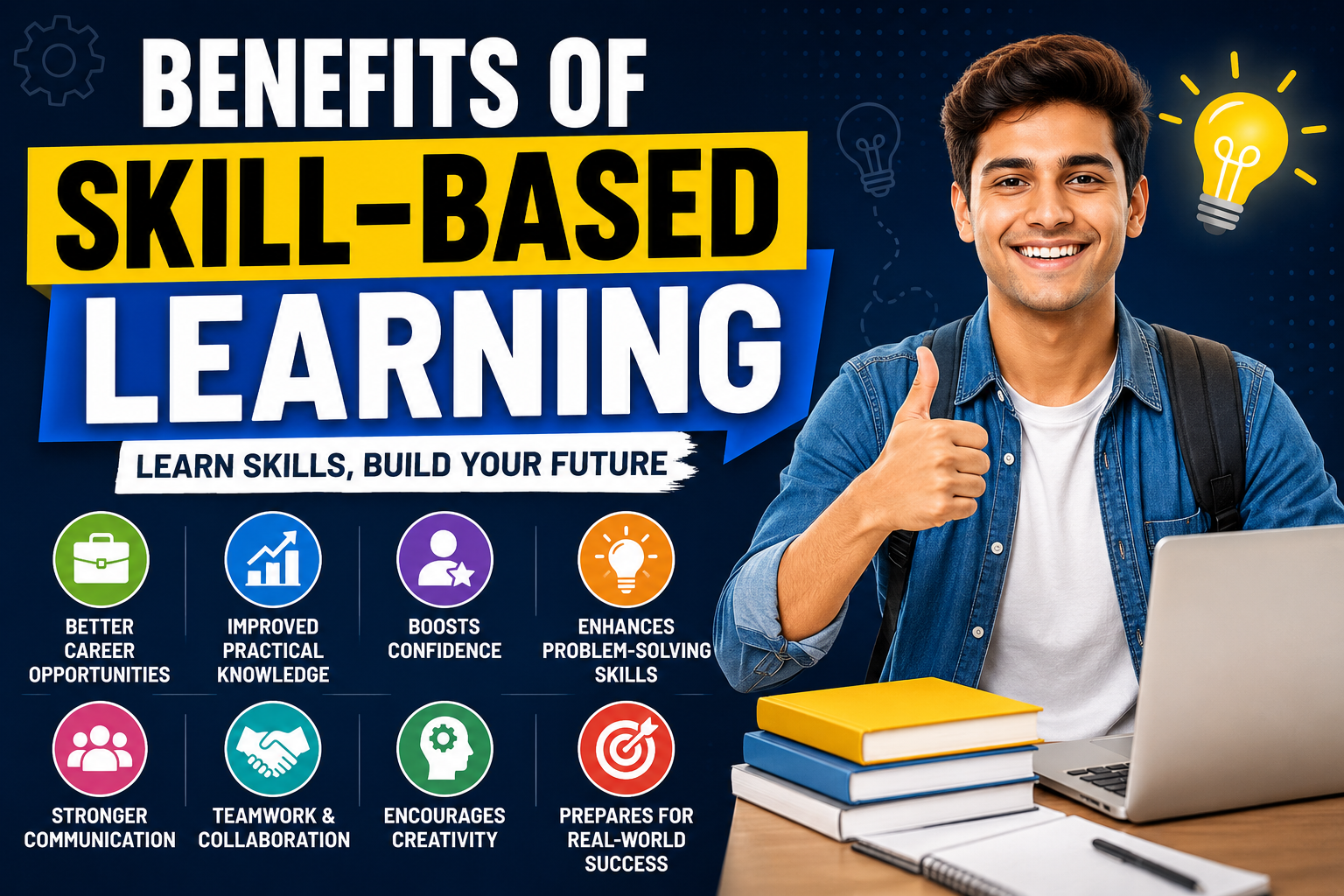
This shift has increased the importance of skill-based learning. Instead of focusing only on theory, skill-based learning helps individuals develop practical abilities that can be used in everyday life and professional careers. It allows learners to gain hands-on experience and become more prepared for future challenges.
From students entering the workforce to professionals looking to advance their careers, skill-based learning offers countless advantages. It not only improves job opportunities but also builds confidence, creativity, and personal growth.
What Is Skill-Based Learning?
Skill-based learning is an approach to education that emphasizes practical knowledge and real-world application. The main objective is to teach learners how to perform tasks effectively rather than simply understand concepts in theory.
For instance, a student studying graphic design may work on actual design projects, while someone learning programming may build applications and websites. By practicing what they learn, students gain experience and develop confidence in their abilities.
This method creates a stronger connection between education and real-life situations, making learning more meaningful and effective.
Why Skill-Based Learning Matters
The world is becoming increasingly competitive. Technology is evolving rapidly, industries are transforming, and job roles are constantly changing. As a result, employers value practical skills more than ever before.
Many graduates struggle to find employment because they lack real-world experience. Skill-based learning addresses this problem by equipping learners with abilities that employers actively seek.
It helps individuals become job-ready while preparing them to handle future workplace challenges with confidence.
Major Benefits of Skill-Based Learning
1. Creates Better Career Opportunities
One of the most significant benefits of skill-based learning is improved employability. People who possess practical skills often have a stronger advantage when applying for jobs.
Organizations prefer candidates who can contribute immediately and require less training. Practical expertise demonstrates readiness, reliability, and competence.
2. Bridges the Gap Between Education and Employment
Many students leave educational institutions with theoretical knowledge but limited practical experience.
Skill-based learning closes this gap by exposing learners to real-world scenarios. They gain valuable experience before entering the workforce, making the transition from education to employment much smoother.
3. Makes Learning More Effective
People learn best when they actively participate in the learning process.
When students apply concepts through projects, exercises, and hands-on activities, they understand topics more deeply and retain information longer compared to traditional memorization methods.
4. Builds Confidence and Self-Belief
Developing a new skill gives individuals a sense of achievement. Every completed project or successful task increases self-confidence.
As learners see their progress, they become more willing to take risks, explore opportunities, and challenge themselves.
5. Encourages Independent Thinking
Skill-based learning often requires learners to find solutions on their own. Instead of depending entirely on instructions, they learn how to analyze situations and make decisions.
This independence helps individuals become more resourceful and capable in both personal and professional settings.
6. Improves Problem-Solving Skills
Every workplace faces challenges that require practical solutions. Skill-based learning teaches individuals how to approach problems logically and creatively.
By working on real tasks and projects, learners develop the ability to think critically and make informed decisions.
7. Enhances Communication Skills
Communication is essential in every field. Whether speaking with clients, colleagues, or managers, clear communication can significantly impact success.
Skill-based learning often includes presentations, discussions, and collaborative projects that strengthen both verbal and written communication abilities.
8. Promotes Creativity and Innovation
Hands-on learning encourages learners to experiment, create, and think differently.
Rather than following fixed instructions, students often explore multiple solutions and develop original ideas. This creative mindset is highly valuable in today’s innovation-driven world.
9. Strengthens Teamwork and Leadership
Most professional environments require people to work together toward common goals.
Through group assignments and collaborative activities, learners develop teamwork skills, leadership qualities, and the ability to work effectively with diverse groups of people.
10. Increases Adaptability
Change is a constant part of modern life. New technologies, tools, and work processes continue to emerge across industries.
Skill-based learning teaches individuals how to adapt quickly, learn new methods, and remain productive in changing environments.
11. Encourages Lifelong Learning
Successful people understand that learning never truly ends.
Skill-based education helps develop a growth mindset where individuals continuously seek opportunities to improve themselves, acquire new abilities, and stay updated with industry trends.
12. Supports Entrepreneurial Success
Entrepreneurs rely heavily on practical skills to manage and grow their businesses.
Skills such as communication, marketing, financial planning, leadership, and problem-solving can help turn ideas into successful ventures. Skill-based learning provides a strong foundation for aspiring business owners.
Popular Skills That Are Valuable Today
Several practical skills are highly sought after in today’s job market, including:
- Digital Marketing
- Content Writing
- Web Development
- Graphic Design
- Artificial Intelligence
- Data Analytics
- Cybersecurity
- Public Speaking
- Leadership
- Project Management
- Video Editing
- Social Media Management
Developing these skills can open doors to better career opportunities and professional growth.
Challenges of Skill-Based Learning
Like any educational approach, skill-based learning comes with certain challenges. It requires time, consistency, and dedication. Some skills may also require access to technology, professional tools, or expert guidance.
However, the long-term rewards often make the effort worthwhile. The practical experience gained can provide benefits that extend throughout a person’s career.
The Future of Skill-Based Education
Educational institutions around the world are increasingly recognizing the importance of practical learning. Schools, colleges, and online learning platforms are introducing programs designed to help students develop job-relevant skills.
As industries continue to evolve, skill-based education is expected to become even more important in preparing individuals for future opportunities.
Conclusion
Skill-based learning is transforming the way people prepare for their careers and personal development. By focusing on practical experience rather than theory alone, it helps learners become more capable, confident, and adaptable.
In a world where knowledge is readily available, the ability to apply that knowledge effectively is what truly sets individuals apart. Whether your goal is to secure a better job, start a business, or continue growing professionally, skill-based learning can provide the tools needed to achieve lasting success.
