Introduction
When people think about student success, they often focus on grades, exam scores, and academic achievements. While these factors are certainly important, they are not the only ingredients needed for a successful future. In reality, many of the skills that help students excel in life are not taught through textbooks. These are known as soft skills.
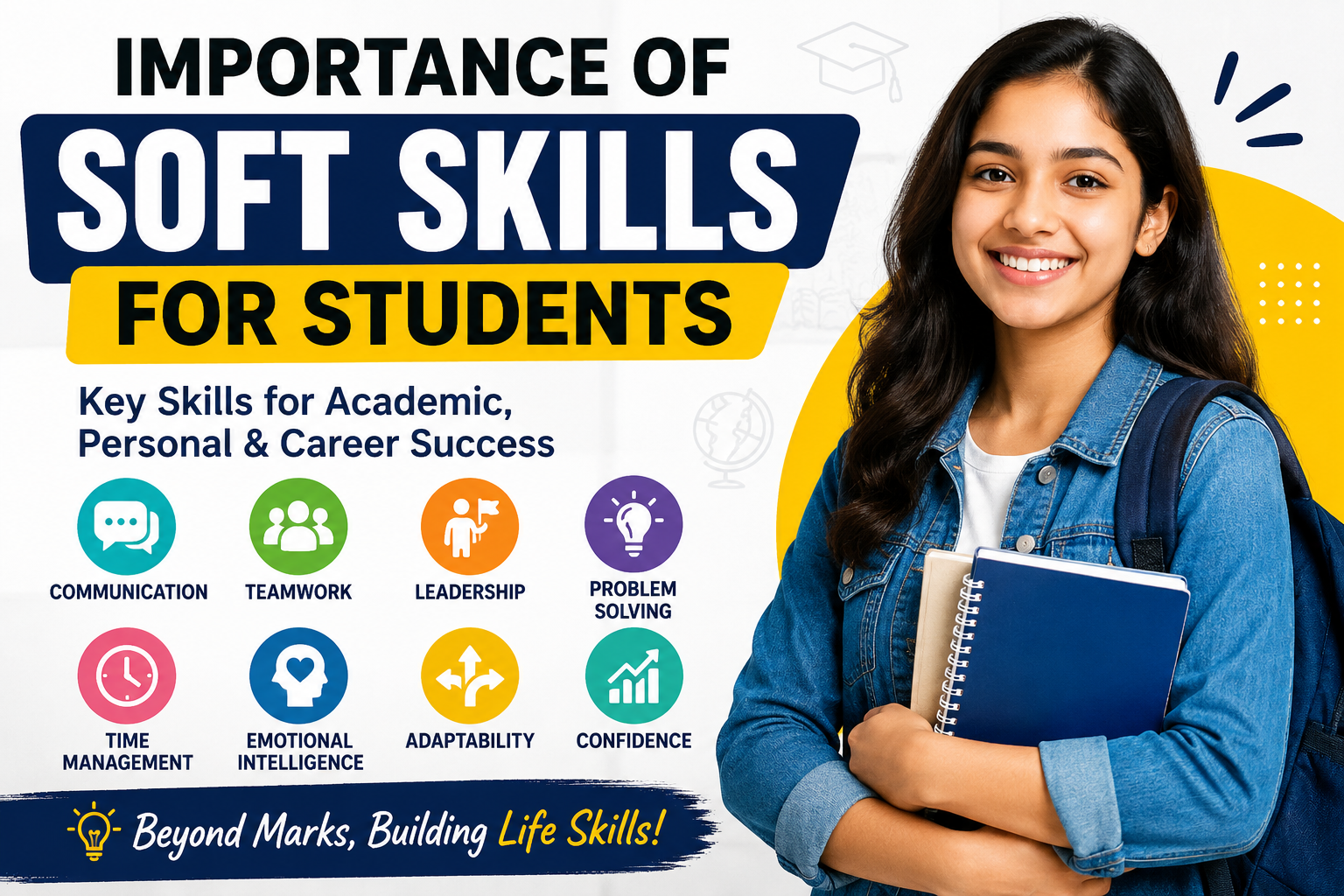
Soft skills are personal qualities that influence how individuals communicate, work with others, solve problems, and handle challenges. They shape a student’s behavior, attitude, and ability to adapt to different situations. In today’s rapidly changing world, soft skills have become just as important as academic knowledge.
Students who develop strong soft skills are better prepared to succeed in school, build meaningful relationships, and achieve their career goals later in life.
What Are Soft Skills?
Soft skills are the personal and social abilities that help people interact effectively with others. Unlike technical or academic skills, soft skills focus on behavior, communication, and emotional awareness.
Examples of important soft skills include:
- Communication skills
- Teamwork and collaboration
- Leadership abilities
- Critical thinking
- Problem-solving
- Time management
- Adaptability
- Creativity
- Emotional intelligence
- Self-confidence
These skills help students handle real-life situations and become more effective in both personal and professional environments.
Why Soft Skills Matter More Than Ever
The world students are preparing to enter is very different from the one previous generations experienced. Technology is evolving quickly, workplaces are becoming more collaborative, and employers are looking for individuals who can do more than simply complete tasks.
Companies want employees who can communicate clearly, think creatively, solve problems, and work well with others. As a result, soft skills are becoming one of the most valuable assets a student can develop.
Even the most academically talented students may struggle if they lack the ability to interact effectively with people or adapt to changing circumstances.
Benefits of Soft Skills for Students
Better Communication and Expression
Communication is a fundamental life skill. Students use it every day when speaking with teachers, participating in discussions, writing assignments, or presenting projects.
Strong communication skills help students:
- Express ideas clearly
- Participate confidently in class
- Build positive relationships
- Improve speaking and writing abilities
Students who communicate effectively often feel more comfortable sharing their thoughts and asking questions.
Greater Confidence
Confidence allows students to take initiative and embrace new opportunities. Soft skills help students become more self-assured because they learn how to express themselves and interact with others successfully.
Confident students are more likely to:
- Join extracurricular activities
- Take leadership roles
- Participate in competitions
- Face challenges with a positive attitude
This confidence often leads to greater academic and personal growth.
Stronger Teamwork Skills
Many school activities require students to work together. Whether it’s a science project, sports competition, or group presentation, teamwork is an essential part of student life.
By developing teamwork skills, students learn how to:
- Cooperate with others
- Respect different opinions
- Share responsibilities
- Resolve disagreements constructively
These experiences prepare them for future careers where collaboration is often necessary.
Improved Problem-Solving Ability
Every student faces obstacles, both inside and outside the classroom. Soft skills encourage students to think critically and find effective solutions instead of giving up when problems arise.
Problem-solving skills help students:
- Analyze situations logically
- Make informed decisions
- Handle unexpected challenges
- Develop creative solutions
These abilities are useful throughout life and become increasingly important as responsibilities grow.
Better Time Management
One of the biggest challenges students face is managing their time effectively. Between homework, exams, family responsibilities, and social activities, staying organized can be difficult.
Time-management skills help students:
- Prioritize tasks
- Meet deadlines
- Reduce stress
- Improve productivity
Students who manage their time wisely often achieve better results while maintaining a healthy balance in life.
Development of Leadership Qualities
Leadership is not limited to being in charge of others. It also involves responsibility, initiative, and the ability to inspire positive action.
Students can develop leadership skills by:
- Leading group projects
- Participating in student organizations
- Volunteering in community programs
- Organizing events and activities
Leadership experiences help students become more responsible, independent, and confident.
Increased Adaptability
Modern life is constantly changing. New technologies, educational methods, and career opportunities require students to be flexible and open to learning.
Adaptable students can:
- Adjust to new environments
- Learn new skills quickly
- Respond positively to change
- Overcome challenges more effectively
Adaptability is one of the most important skills for future success.
Enhanced Emotional Intelligence
Emotional intelligence is the ability to understand and manage emotions while also recognizing the feelings of others.
Students with strong emotional intelligence tend to:
- Build stronger friendships
- Handle stress more effectively
- Show empathy and understanding
- Resolve conflicts peacefully
This skill contributes to both personal happiness and professional success.
How Soft Skills Support Career Growth
The workplace of the future will demand more than technical expertise. Employers increasingly seek candidates who can collaborate with colleagues, communicate effectively, and adapt to changing circumstances.
Students who develop soft skills gain several career advantages:
- Better interview performance
- Strong workplace relationships
- Greater leadership potential
- Increased opportunities for promotion
In many cases, soft skills are what transform a qualified candidate into an exceptional employee.
Practical Ways Students Can Build Soft Skills
Developing soft skills is an ongoing process. Students can strengthen these abilities through everyday experiences and activities.
Join School Clubs and Organizations
Participation in clubs encourages teamwork, leadership, and communication.
Practice Public Speaking
Speaking in front of an audience helps students become more confident and articulate.
Take Part in Volunteer Activities
Community service teaches responsibility, empathy, and collaboration.
Read and Learn Continuously
Reading improves communication, creativity, and critical thinking.
Listen Actively
Paying attention when others speak helps improve understanding and relationships.
Set Personal Goals
Goal-setting encourages discipline, motivation, and time management.
The Role of Parents and Teachers
Parents and teachers have a significant influence on a student’s development. They can help nurture soft skills by creating opportunities for communication, responsibility, and independent thinking.
Supportive guidance from adults helps students:
- Build confidence
- Learn from mistakes
- Develop leadership abilities
- Strengthen social skills
When schools and families work together, students are more likely to develop the skills needed for long-term success.
Conclusion
Soft skills are an essential part of a student’s personal and professional development. While academic knowledge provides the foundation for education, soft skills determine how effectively students apply that knowledge in real-life situations.
Communication, teamwork, leadership, adaptability, emotional intelligence, and problem-solving are not just useful skills—they are lifelong assets. Students who invest time in developing these qualities become more confident, capable, and prepared for the future.
In a world where success depends on both knowledge and character, soft skills are the bridge that connects education with achievement.
