Introduction
Artificial Intelligence (AI) is no longer a technology reserved for scientists and tech giants. Today, it has become an essential part of everyday life. Whether you’re unlocking your phone with facial recognition, receiving movie recommendations, or using a virtual assistant to set reminders, AI is quietly working behind the scenes.
Over the past decade, Artificial Intelligence has evolved from an emerging technology into a powerful force driving innovation across industries. Businesses use it to improve efficiency, schools use it to personalize learning, and healthcare providers use it to deliver better patient care.
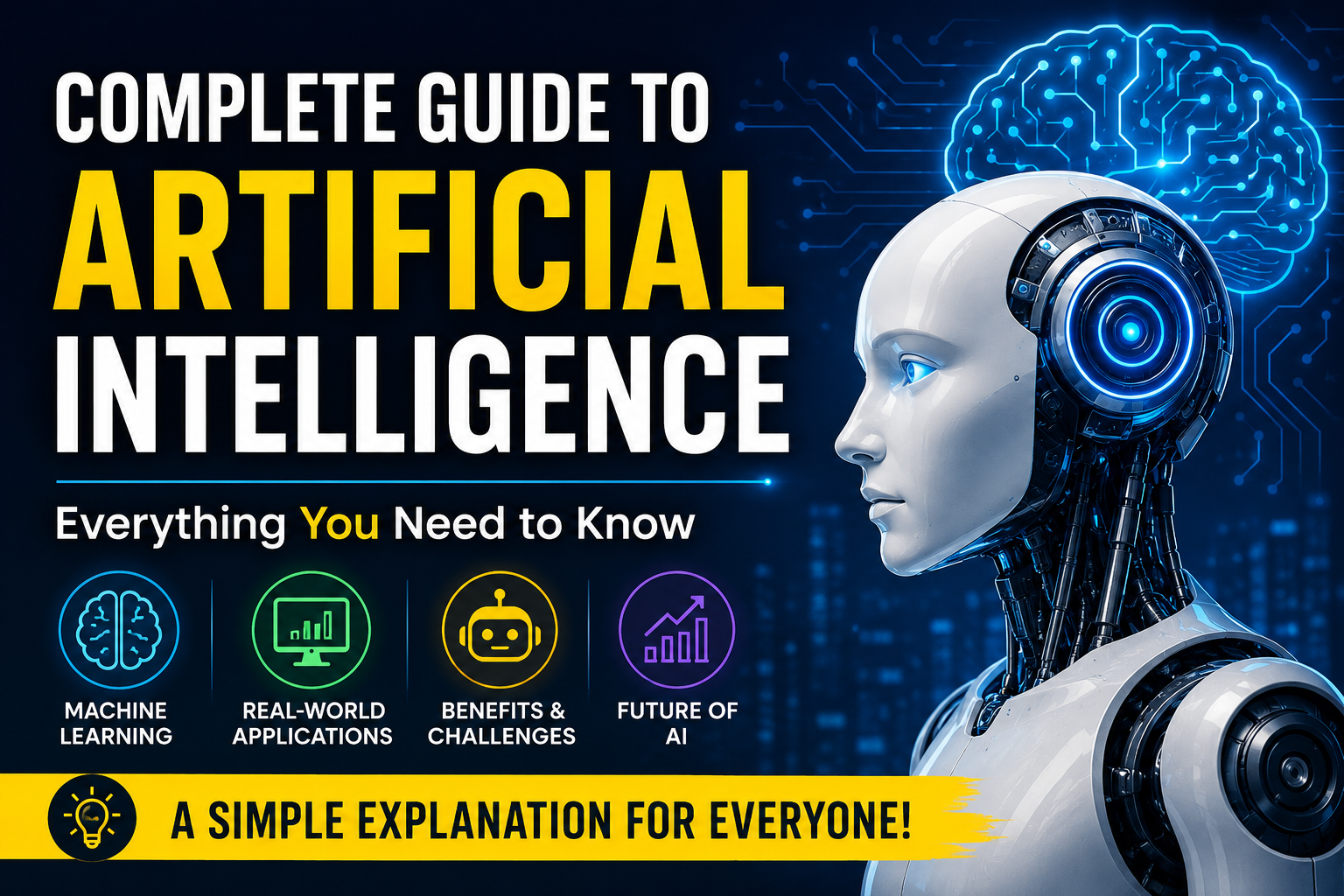
As AI continues to shape the future, understanding how it works and why it matters has become increasingly important. This guide explores the fundamentals of Artificial Intelligence, its applications, benefits, challenges, and future potential.
What Is Artificial Intelligence?
Artificial Intelligence is the science of creating computer systems that can perform tasks typically associated with human intelligence. These tasks include learning, reasoning, problem-solving, understanding language, recognizing patterns, and making decisions.
Unlike traditional software programs that follow fixed instructions, AI systems can learn from experience. They analyze information, adapt to changing conditions, and improve their performance over time.
In simple words, AI enables machines to think, learn, and respond in ways that resemble human behavior.
Why Artificial Intelligence Is So Important
The modern world generates enormous amounts of data every second. Processing this information manually would be impossible. Artificial Intelligence helps organizations analyze data quickly and accurately, allowing them to make better decisions and solve problems more effectively.
AI is important because it:
- Automates repetitive tasks
- Improves productivity
- Enhances decision-making
- Reduces human error
- Creates personalized user experiences
- Supports innovation across industries
As technology advances, AI is becoming a key driver of economic growth and digital transformation worldwide.
The Journey of Artificial Intelligence
Although AI has become popular in recent years, its roots go back several decades. Researchers first explored the possibility of intelligent machines in the 1950s. At that time, computers were basic and lacked the processing power needed to support advanced AI systems.
Over the years, technological improvements in computing, data storage, and internet connectivity accelerated AI development. What began as an academic concept eventually evolved into practical applications used by millions of people every day.
Today, AI powers everything from search engines and online shopping platforms to advanced medical systems and autonomous vehicles.
How Artificial Intelligence Works
Artificial Intelligence operates by combining data, algorithms, and computational power.
Data: The Foundation of AI
Every AI system depends on data. Information collected from users, sensors, websites, and devices serves as the raw material that AI uses to learn.
Algorithms: The Brain Behind the System
Algorithms are mathematical instructions that help AI process information and identify patterns.
Learning From Experience
Using machine learning techniques, AI systems improve their accuracy by analyzing previous outcomes and adjusting their behavior accordingly.
Making Intelligent Decisions
Once trained, AI systems can make predictions, provide recommendations, and automate tasks with remarkable efficiency.
The more quality data an AI system receives, the more effective it becomes.
Different Categories of Artificial Intelligence
Not all AI systems are created equal. Experts generally classify AI into different categories based on its capabilities.
Narrow Artificial Intelligence
Narrow AI is designed to perform specific tasks. This is the type of AI most commonly used today.
Examples include:
- Voice assistants
- Search engines
- Recommendation algorithms
- Customer service chatbots
While highly effective, Narrow AI cannot operate beyond its intended function.
General Artificial Intelligence
General AI represents a future stage where machines possess human-like intelligence and can perform a wide variety of tasks independently.
Scientists continue researching this concept, but it has not yet been achieved.
Super Artificial Intelligence
Super AI is a hypothetical form of intelligence that would exceed human capabilities in every area. While popular in science fiction discussions, it remains a theoretical concept.
Core Technologies That Power AI
Several technologies work together to make Artificial Intelligence possible.
Machine Learning
Machine Learning allows computers to learn from data and improve without direct programming.
Deep Learning
Deep Learning uses advanced neural networks to process complex information such as images, speech, and text.
Natural Language Processing
Natural Language Processing enables machines to understand and communicate using human language.
Examples include:
- Translation tools
- Virtual assistants
- AI chatbots
- Content generation systems
Computer Vision
Computer Vision helps machines analyze and understand visual information.
Applications include:
- Facial recognition
- Medical imaging
- Security systems
- Self-driving vehicles
Robotics
Robotics combines AI with physical machines capable of performing tasks automatically or with minimal human intervention.
Real-World Applications of Artificial Intelligence
AI is making a significant impact across various sectors.
Healthcare
Healthcare professionals use AI to identify diseases, analyze medical scans, and improve patient outcomes. AI-driven systems can often detect patterns that humans might overlook.
Education
Educational platforms use AI to create personalized learning experiences. Students receive tailored lessons based on their strengths, weaknesses, and learning pace.
Banking and Finance
Financial institutions use AI to prevent fraud, assess risks, automate transactions, and provide customer support.
Transportation
AI improves route planning, traffic management, and vehicle automation, helping make transportation safer and more efficient.
Retail and E-Commerce
Online stores use AI to understand customer behavior, recommend products, and optimize inventory management.
Agriculture
Farmers are using AI technologies to monitor crop health, predict weather conditions, and improve productivity.
Entertainment
Streaming services rely on AI to recommend content based on user preferences and viewing history.
Advantages of Artificial Intelligence
Artificial Intelligence offers numerous benefits that make it valuable across industries.
Higher Efficiency
AI can complete repetitive tasks much faster than humans.
Improved Accuracy
Well-trained AI systems can reduce errors and increase reliability.
Around-the-Clock Operation
Unlike humans, AI systems do not require breaks or rest.
Better Customer Experiences
AI-powered assistants provide quick and personalized support.
Cost Savings
Automation can help organizations reduce operational expenses over time.
Faster Decision-Making
AI analyzes vast amounts of information in seconds, helping businesses make informed decisions.
Challenges and Risks of AI
Despite its advantages, Artificial Intelligence also presents several concerns.
Privacy Concerns
Many AI systems rely on personal data, creating questions about privacy and data protection.
Job Displacement
Automation may reduce the need for certain types of work, particularly repetitive tasks.
Algorithmic Bias
If training data contains bias, AI systems may produce unfair outcomes.
Security Threats
Cybercriminals may attempt to exploit AI technologies for malicious purposes.
Ethical Questions
As AI becomes more advanced, society must address important ethical issues regarding accountability and responsible use.
How AI Is Changing Daily Life
Many people interact with Artificial Intelligence multiple times a day without realizing it.
Examples include:
- Smartphone voice assistants
- GPS navigation systems
- Streaming recommendations
- Online shopping suggestions
- Smart home devices
- Social media feeds
- Spam detection tools
These technologies make everyday activities faster, easier, and more personalized.
Career Opportunities in Artificial Intelligence
The demand for AI professionals continues to rise as more industries adopt intelligent technologies.
Popular career paths include:
- Artificial Intelligence Engineer
- Machine Learning Specialist
- Data Scientist
- Robotics Engineer
- AI Researcher
- Data Analyst
- Computer Vision Engineer
- Natural Language Processing Expert
These careers offer excellent growth potential and competitive salaries in the modern job market.
Skills Needed to Learn Artificial Intelligence
If you want to build a career in AI, focus on developing the following skills:
- Programming languages such as Python
- Mathematics and statistics
- Data analysis
- Machine learning techniques
- Problem-solving abilities
- Critical thinking
- Deep learning concepts
Building expertise in these areas can open doors to exciting opportunities in the technology sector.
What Does the Future Hold for AI?
The future of Artificial Intelligence is filled with possibilities. Experts predict that AI will continue transforming industries through smarter automation, advanced healthcare solutions, personalized education systems, and innovative scientific discoveries.
As technology evolves, AI will likely become even more integrated into everyday life. However, responsible development and ethical oversight will be essential to ensure that AI benefits society as a whole.
Conclusion
Artificial Intelligence has emerged as one of the most transformative technologies of our time. It is changing how people work, communicate, learn, and solve problems. From healthcare and education to business and entertainment, AI is creating new opportunities while reshaping existing industries.
Understanding Artificial Intelligence is becoming increasingly valuable in a world driven by technology. Whether you are a student preparing for the future or a professional seeking new skills, learning about AI can help you stay ahead in the digital age.
The AI revolution is already underway, and those who understand its potential will be better prepared to thrive in the years ahead.
