Introduction
A few years ago, cybersecurity was considered a niche area within information technology. Today, it has become one of the most important and in-demand professions in the world. Every organization—whether it’s a multinational corporation, a government agency, a healthcare provider, or a small business—depends on digital systems to operate. As a result, protecting those systems has become a top priority.
Cybercriminals are constantly looking for ways to exploit vulnerabilities, steal sensitive data, disrupt services, and cause financial damage. To defend against these threats, organizations need skilled cybersecurity professionals who understand both technology and security.
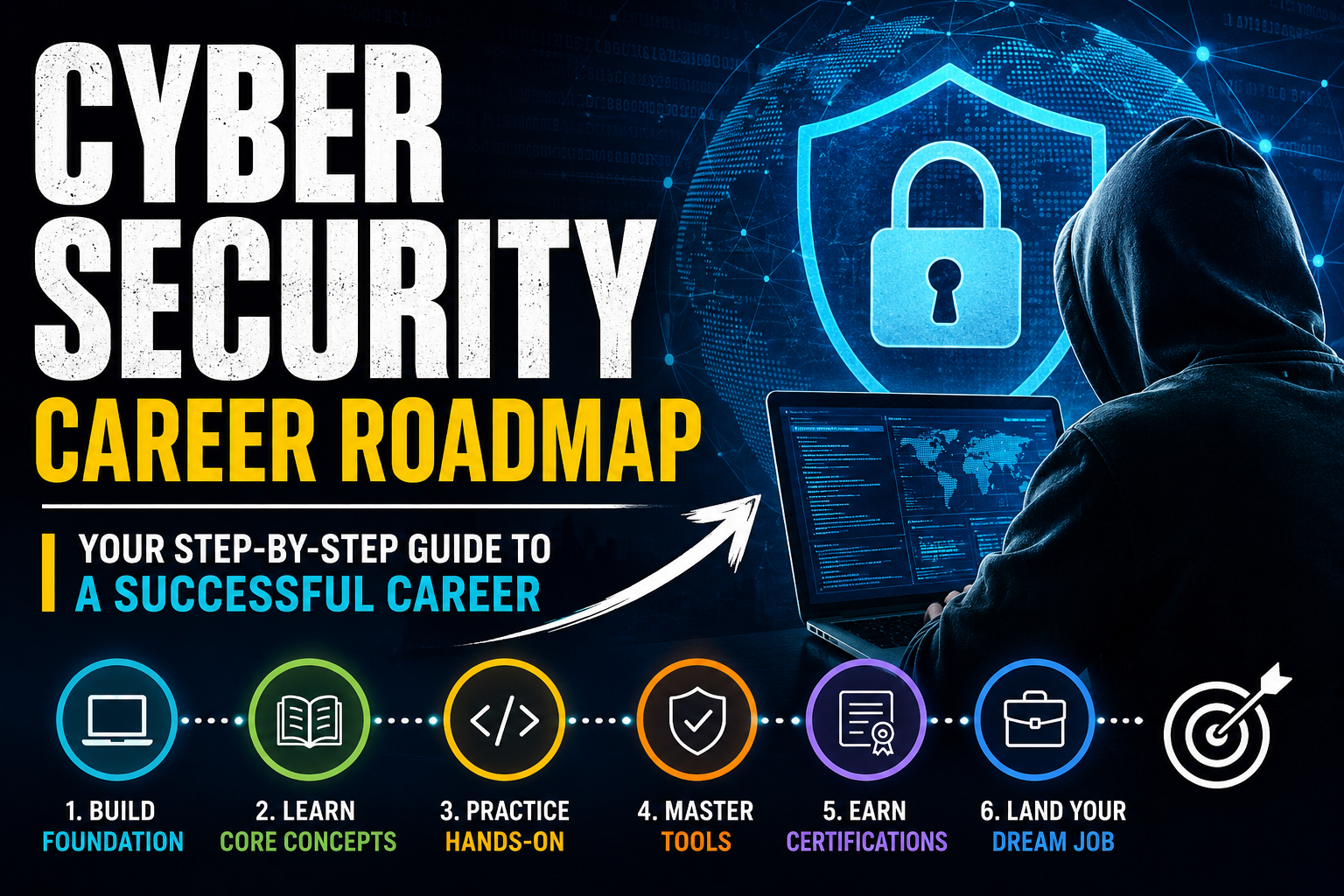
If you’re considering a career in cybersecurity, the opportunities have never been greater. However, the field can seem overwhelming at first because there are so many roles, certifications, tools, and learning paths available. The key is to follow a structured roadmap and focus on building a strong foundation before moving into specialized areas.
This guide outlines a realistic path for anyone who wants to build a successful cybersecurity career, regardless of their background or experience level.
Understanding the Role of Cybersecurity
Cybersecurity is not just about stopping hackers. It is a broad discipline focused on protecting digital assets, maintaining business continuity, and managing risk.
At its core, cybersecurity involves three primary objectives:
- Protecting sensitive information from unauthorized access
- Ensuring data remains accurate and trustworthy
- Keeping systems and services available when needed
Cybersecurity professionals achieve these goals by implementing security controls, monitoring systems for suspicious activity, identifying vulnerabilities, and responding to incidents when they occur.
Because technology changes rapidly, cybersecurity is a profession that requires continuous learning and adaptation.
Why Cybersecurity Is an Attractive Career Choice
There are several reasons why cybersecurity continues to attract professionals from various backgrounds.
Growing Global Demand
Organizations worldwide face a shortage of qualified cybersecurity talent. As cyber threats become more sophisticated, the demand for skilled professionals continues to increase.
Excellent Career Growth
Unlike many industries where career progression can be slow, cybersecurity offers multiple pathways for advancement. Professionals can move from entry-level positions to senior technical or leadership roles within a relatively short period if they continuously develop their skills.
Diverse Specializations
Cybersecurity is not a single job. It includes numerous specializations such as:
- Security Operations
- Ethical Hacking
- Cloud Security
- Incident Response
- Digital Forensics
- Security Engineering
- Risk Management
- Security Architecture
This diversity allows professionals to pursue areas that align with their interests and strengths.
Lifelong Learning Opportunities
Cybersecurity is ideal for individuals who enjoy solving problems, researching new technologies, and staying ahead of emerging threats.
Phase 1: Build Your Technical Foundation
One of the most common mistakes beginners make is focusing on hacking techniques before understanding the systems they are trying to secure.
Before learning advanced security concepts, invest time in understanding how technology works.
Learn Computer Fundamentals
Start with the basics:
- Computer hardware
- Operating systems
- File systems
- User accounts and permissions
- Software installation and management
A solid understanding of these concepts will make every future cybersecurity topic easier to grasp.
Develop Strong Networking Skills
Networking knowledge is often what separates average cybersecurity professionals from exceptional ones.
Learn how devices communicate by studying:
- TCP/IP
- OSI Model
- DNS
- DHCP
- Routing
- Switching
- NAT
- VPNs
- Firewalls
Many cyberattacks target network infrastructure, so understanding network traffic and communication protocols is essential.
Become Comfortable with Operating Systems
Most cybersecurity work involves either Windows, Linux, or both.
Windows Administration
Focus on:
- Active Directory
- Group Policies
- User Management
- PowerShell
- Security Policies
Linux Administration
Focus on:
- Command-Line Navigation
- File Permissions
- User Accounts
- Package Management
- System Logs
Linux skills are particularly valuable because many servers, cloud platforms, and security tools rely on Linux environments.
Phase 2: Learn Security Fundamentals
After developing your IT knowledge, it’s time to explore the principles that form the foundation of cybersecurity.
The CIA Triad
The CIA Triad serves as the cornerstone of information security.
Confidentiality
Ensures information is accessible only to authorized individuals.
Integrity
Protects data from unauthorized modification or tampering.
Availability
Ensures systems and services remain operational and accessible.
Understanding these principles helps security professionals make informed decisions about protecting organizational assets.
Risk and Threat Management
Not every vulnerability represents the same level of risk.
Security professionals must learn to:
- Identify threats
- Assess vulnerabilities
- Evaluate risks
- Prioritize mitigation efforts
Risk management plays a critical role in organizational security strategies.
Access Control and Authentication
Learn how users are identified and granted access to resources through:
- Password-based authentication
- Multi-factor authentication
- Role-based access control
- Identity management systems
These concepts are fundamental to securing modern environments.
Phase 3: Learn Scripting and Automation
You don’t need to become a professional software developer to work in cybersecurity. However, basic programming knowledge can significantly improve your effectiveness.
Automation helps security professionals save time and perform tasks more efficiently.
Python
Python is often the first language recommended for cybersecurity professionals because it is easy to learn and widely used.
Applications include:
- Security automation
- Vulnerability scanning
- Data analysis
- Tool development
Bash Scripting
Useful for automating tasks in Linux environments.
PowerShell
Essential for managing and securing Windows infrastructures.
Even basic scripting skills can provide a significant advantage in the workplace.
Phase 4: Gain Hands-On Experience
Cybersecurity cannot be mastered through theory alone.
Employers want professionals who can apply their knowledge in practical situations.
Build a Home Lab
Creating a personal lab environment is one of the best ways to gain real-world experience.
A simple home lab may include:
- Kali Linux
- Windows Workstations
- Windows Server
- Vulnerable Applications
- Virtual Networks
Experimenting in a controlled environment allows you to safely explore security concepts and tools.
Practice Through Cybersecurity Platforms
Hands-on platforms provide valuable learning experiences.
Popular options include:
- TryHackMe
- Hack The Box
- PicoCTF
- OverTheWire
These platforms help develop practical skills while exposing learners to realistic attack and defense scenarios.
Phase 5: Master Essential Security Tools
Cybersecurity professionals use various tools to analyze systems, identify vulnerabilities, and investigate incidents.
Important tools to learn include:
Nmap
Used for network discovery and security auditing.
Wireshark
Captures and analyzes network traffic.
Burp Suite
A leading tool for web application security testing.
Metasploit
Used for penetration testing and vulnerability validation.
Nessus
A vulnerability assessment tool widely used in enterprise environments.
Remember that understanding the purpose behind each tool is more important than memorizing commands.
Phase 6: Choose Your Career Path
As your skills develop, you can begin specializing in an area of cybersecurity that interests you most.
Security Operations Analyst
Security analysts monitor systems, investigate alerts, and help organizations respond to threats.
This role is often considered the gateway into cybersecurity.
Penetration Tester
Penetration testers simulate cyberattacks to identify vulnerabilities before malicious actors can exploit them.
This path is ideal for individuals who enjoy offensive security and problem-solving.
Security Engineer
Security engineers design and implement protective technologies such as firewalls, endpoint security solutions, and monitoring systems.
Cloud Security Specialist
Cloud security professionals secure resources hosted on platforms such as AWS, Microsoft Azure, and Google Cloud.
With cloud adoption continuing to grow, this specialization offers strong long-term career prospects.
Digital Forensics and Incident Response
These professionals investigate breaches, collect digital evidence, and determine how incidents occurred.
This path combines technical expertise with investigative skills.
Governance, Risk, and Compliance
GRC professionals focus on policies, regulations, audits, and risk management rather than hands-on technical operations.
This specialization is ideal for individuals who enjoy strategic planning and communication.
Certifications That Add Value
While certifications should never replace practical skills, they can help validate your knowledge and improve your job prospects.
Beginner Certifications
- CompTIA A+
- CompTIA Network+
- CompTIA Security+
Intermediate Certifications
- CompTIA CySA+
- eJPT
- PNPT
- CEH
Advanced Certifications
- OSCP
- CISSP
- CISM
- CCSP
Select certifications that align with your chosen career path rather than pursuing certifications solely for their popularity.
Building a Portfolio That Gets Attention
A strong portfolio can often differentiate you from other candidates.
Consider showcasing:
- Home lab projects
- Security research
- Technical blogs
- Vulnerability assessments
- Automation scripts
- GitHub repositories
- CTF write-ups
Employers appreciate candidates who demonstrate initiative and a genuine passion for learning.
Skills Beyond Technology
Technical expertise is only one part of a successful cybersecurity career.
The most effective professionals also possess:
Communication Skills
Security professionals must regularly explain complex issues to non-technical audiences.
Critical Thinking
Analyzing threats and making informed decisions requires strong reasoning skills.
Curiosity
Cybersecurity rewards those who continuously ask questions and explore how systems work.
Adaptability
New threats emerge every day, making flexibility and continuous learning essential.
What a Typical Career Journey Looks Like
Although every professional follows a unique path, many cybersecurity careers progress through similar stages.
Entry Level
- IT Support Specialist
- Help Desk Technician
- Junior System Administrator
Early Cybersecurity Roles
- SOC Analyst
- Junior Security Analyst
- Security Operations Associate
Mid-Level Positions
- Penetration Tester
- Security Engineer
- Incident Responder
- Cloud Security Engineer
Senior Positions
- Security Architect
- Security Consultant
- Security Manager
Executive Leadership
- Director of Cybersecurity
- Chief Information Security Officer (CISO)
Success rarely happens overnight. Most professionals spend years developing expertise before reaching senior positions.
Conclusion
Cybersecurity is not simply a career choice—it is a journey of continuous learning, problem-solving, and adaptation. The field rewards individuals who are curious, persistent, and willing to invest time in developing both technical and professional skills.
Start by mastering computer systems, networking, and operating systems. Build hands-on experience through labs and practical projects. Learn security concepts, explore different specializations, and develop a portfolio that demonstrates your abilities. Most importantly, remain committed to learning because cybersecurity is a field where growth never truly stops.
For those willing to put in the effort, cybersecurity offers a challenging, rewarding, and future-proof career with opportunities that continue to expand year after year.
