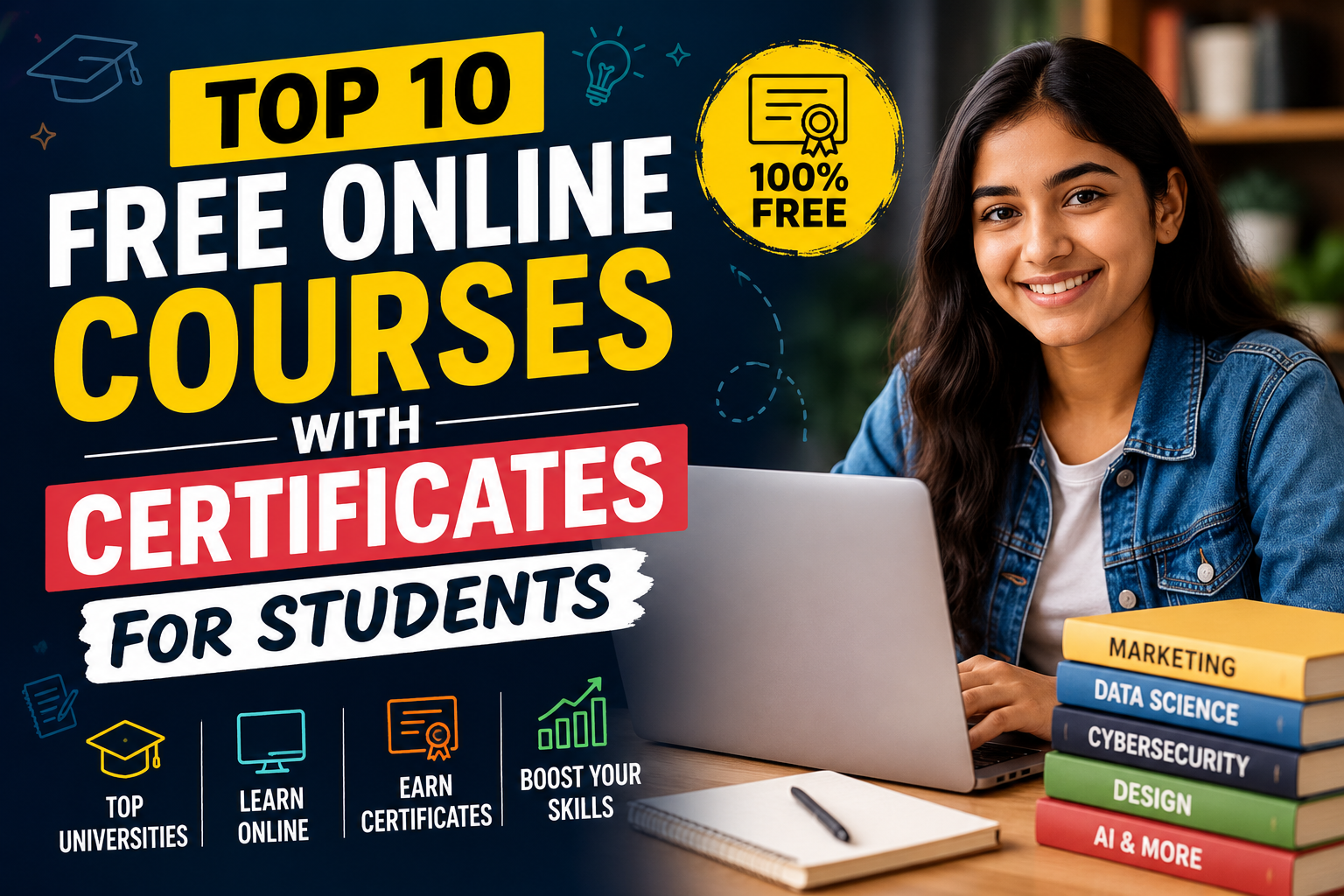
Learning no longer depends on sitting in a classroom for hours every day. Thanks to the internet, students now have access to courses taught by professors from top universities and experts from leading companies—all from the comfort of their homes.
The best part? Many of these courses are completely free and offer certificates that can be added to a resume, portfolio, or LinkedIn profile. While a certificate alone won’t guarantee success, it can demonstrate initiative, curiosity, and a commitment to learning—qualities that employers and universities value.
If you’re looking to build new skills without spending money, here are ten free online courses that deserve a spot on your learning list.
1. CS50: Harvard’s Introduction to Computer Science
Few online courses have earned as much praise as CS50. Designed by Harvard University, this course introduces students to the world of programming and computational thinking in an engaging and practical way.
Rather than simply teaching code, it teaches how to think like a problem solver.
What makes it stand out?
- Beginner-friendly lessons
- Real-world programming projects
- Strong focus on problem-solving
- Excellent teaching quality
Whether you dream of becoming a software engineer or simply want to understand technology better, CS50 is a fantastic place to begin.
2. Google Digital Marketing & E-Commerce
Every business today needs an online presence. From social media campaigns to online stores, digital marketing skills have become valuable across industries.
Google’s free course introduces students to the fundamentals of online marketing while providing practical knowledge that can be applied immediately.
Topics covered include:
- Search engine optimization (SEO)
- Digital advertising
- Email marketing
- Social media strategies
- E-commerce operations
For students interested in freelancing, entrepreneurship, or business careers, this course offers a strong foundation.
3. Introduction to Artificial Intelligence
Artificial Intelligence is no longer limited to science fiction movies. It’s already powering chatbots, recommendation systems, virtual assistants, and countless other technologies we use daily.
This introductory course explains AI in simple terms and helps students understand how the technology works behind the scenes.
You’ll explore:
- AI fundamentals
- Machine learning basics
- Everyday applications of AI
- Ethical concerns and challenges
It’s an excellent starting point for anyone curious about the future of technology.
4. Financial Markets
Money influences almost every aspect of life, yet many students graduate without understanding how financial systems function.
This highly respected course offers insights into investing, market behavior, and financial decision-making.
Students learn about:
- Investment principles
- Financial institutions
- Risk management
- Market psychology
Even if you never work in finance, understanding these concepts can help you make smarter personal financial decisions.
5. Project Management Essentials
Managing projects isn’t just for managers. Students often juggle assignments, extracurricular activities, internships, and personal goals—all of which require organization and planning.
This course teaches practical strategies for managing tasks and working effectively with teams.
Key lessons include:
- Setting project goals
- Managing deadlines
- Team collaboration
- Identifying and reducing risks
These skills remain valuable regardless of your future profession.
6. English for Career Development
Technical skills can help you get noticed, but communication skills often determine long-term success.
This course focuses on helping students prepare for the professional world by improving their written and spoken communication.
What you’ll gain:
- Better resume-writing skills
- Stronger interview techniques
- Professional vocabulary
- Improved workplace communication
For students planning to enter competitive job markets, this course can be particularly helpful.
7. Data Science Foundations
We live in a world driven by data. Companies collect information constantly and use it to make decisions, improve services, and predict future trends.
This course introduces students to the fundamentals of data science without overwhelming technical complexity.
Key areas covered:
- Data analysis basics
- Data visualization
- Statistical thinking
- Interpreting information
It serves as an excellent introduction to one of today’s fastest-growing career fields.
8. Introduction to Cybersecurity
From social media accounts to online banking, digital security affects everyone. Understanding cybersecurity isn’t just useful for IT professionals—it’s becoming an essential life skill.
This course explains how cyber threats work and how individuals and organizations can protect themselves.
Topics include:
- Online safety
- Network security
- Common cyber attacks
- Career opportunities in cybersecurity
Students interested in technology will find this field both fascinating and highly relevant.
9. Fundamentals of Graphic Design
Good design influences everything from websites and advertisements to mobile apps and presentations.
This course introduces the principles that make visual communication effective and memorable.
Skills you’ll develop:
- Typography basics
- Color selection
- Layout design
- Visual storytelling
Even students outside creative fields can benefit from understanding how design shapes communication.
10. Sustainable Development and Global Challenges
Future leaders need to understand the environmental and social issues shaping our world. This course explores some of the biggest challenges facing modern societies and discusses possible solutions.
Subjects include:
- Climate change
- Sustainable development
- Environmental responsibility
- Global citizenship
It’s an eye-opening course for students who want a broader understanding of the world around them.
Why Online Courses Are Worth Your Time
Many students hesitate to enroll in online courses because they think certificates don’t matter. While certificates aren’t magic tickets to success, the skills you gain can have a lasting impact.
You Learn Practical Knowledge
Online courses often focus on real-world applications rather than just theory, making the learning experience more useful.
You Demonstrate Initiative
Employers appreciate candidates who take the time to learn independently and improve themselves outside formal education.
You Can Explore New Interests
Not sure what career path to choose? Online learning allows you to test different fields before making major decisions.
You Control Your Schedule
Most courses are self-paced, allowing you to learn whenever it’s convenient.
You Save Money
Perhaps the biggest advantage is that you can gain valuable knowledge without paying expensive tuition fees.
Conclusion
The opportunity to learn from some of the world’s best educators and organizations is now just a few clicks away. Whether you’re interested in technology, business, finance, communication, or sustainability, there is a free online course waiting for you.
Instead of spending hours scrolling through social media, consider investing some of that time in learning a new skill. A few weeks of consistent effort can lead to knowledge that benefits you for years to come.
After all, the most valuable investment a student can make is not in a product or gadget—it’s in their own education.
