Introduction
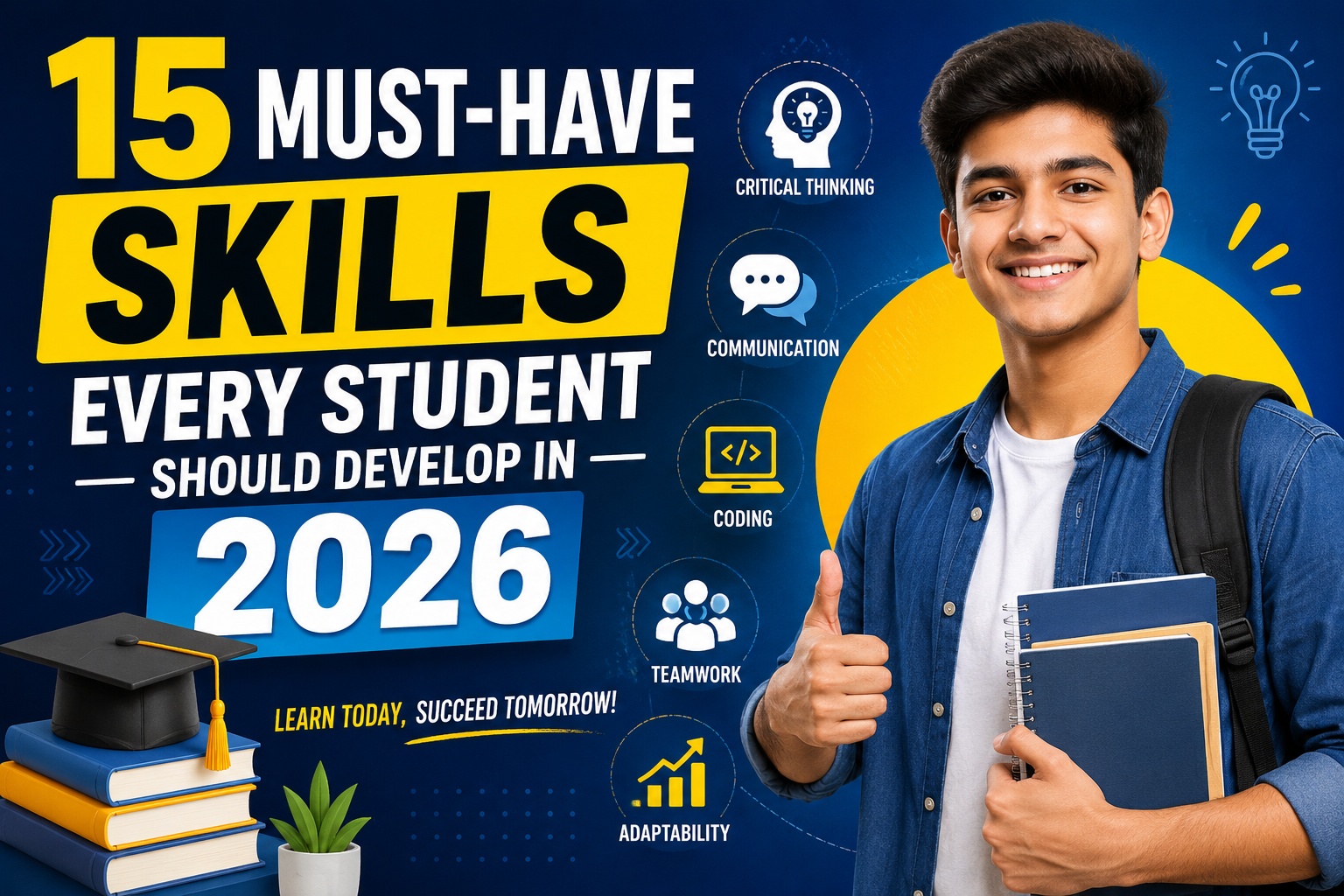
The world is moving faster than ever before. New technologies appear almost every day, workplaces are changing, and employers are looking for more than just academic qualifications. In 2026, students need a combination of knowledge, practical abilities, and personal skills to succeed in school, college, and future careers.
Getting good grades is still important, but it is no longer the only factor that determines success. Students who can communicate effectively, adapt to change, solve problems, and use modern technology confidently will have a significant advantage.
The good news is that these skills can be learned and improved over time. Let’s take a closer look at the 15 most important skills every student should focus on developing in 2026.
1. Digital Literacy
Technology has become a part of everyday life. From online learning platforms to cloud storage and productivity apps, students use digital tools regularly.
Digital literacy means understanding how to use technology safely and effectively. It includes managing files, searching for information online, protecting personal data, and using software efficiently.
Students who are digitally skilled can complete tasks faster and adapt more easily to modern learning environments.
2. AI Awareness
Artificial Intelligence is shaping the future of education, healthcare, business, and countless other industries. Students don’t need to become AI experts, but they should understand the basics.
Learning how AI works, where it is used, and its advantages and limitations can help students make better use of technology and prepare for future career opportunities.
Those who understand AI today will be better prepared for tomorrow’s workforce.
3. Critical Thinking
We live in an age where information is available everywhere. However, not everything online is accurate or trustworthy.
Critical thinking helps students question information, evaluate evidence, and make logical decisions. Instead of accepting everything they hear or read, they learn to analyze situations and form their own conclusions.
This skill is valuable in academics, careers, and everyday life.
4. Communication Skills
No matter what career a student chooses, communication will always play an important role.
Being able to express ideas clearly, listen actively, and communicate confidently can improve relationships, teamwork, and leadership abilities.
Strong communication skills also help students perform better during presentations, interviews, and group discussions.
5. Problem-Solving
Challenges are a normal part of life. Successful students learn how to approach problems calmly and find practical solutions.
Problem-solving involves identifying the issue, understanding possible causes, exploring options, and taking action.
People who can solve problems effectively are often seen as reliable, capable, and resourceful.
6. Time Management
One of the biggest challenges students face is managing their time wisely. Between classes, assignments, exams, and personal activities, it’s easy to feel overwhelmed.
Good time management helps students stay organized, meet deadlines, and reduce stress. Creating schedules, setting priorities, and avoiding procrastination are all important habits that contribute to success.
7. Financial Literacy
Many students leave school without learning how money works. Yet financial decisions affect nearly every stage of life.
Understanding budgeting, saving, investing, and responsible spending can help students build a secure future.
Learning financial literacy early encourages smart habits that can last a lifetime.
8. Basic Coding Skills
Technology powers much of the modern world, and coding has become one of the most useful skills students can learn.
Even basic programming knowledge can improve logical thinking and open doors to exciting career opportunities. Students can start with beginner-friendly languages such as Python or JavaScript.
Coding also helps students understand the technology they use every day.
9. Creativity
Creativity is not just for artists and designers. It is a valuable skill in science, business, education, and technology as well.
Creative students can think differently, generate fresh ideas, and find innovative solutions to challenges.
As automation handles more routine tasks, creativity will become even more important in the future workplace.
10. Emotional Intelligence
Understanding emotions is an important part of personal growth and success.
Emotional intelligence helps students recognize their feelings, manage stress, empathize with others, and build healthy relationships.
Students with strong emotional intelligence often work better in teams and handle difficult situations more effectively.
11. Adaptability
The ability to adapt is one of the most valuable skills in a rapidly changing world.
New technologies, learning methods, and career opportunities continue to emerge. Students who can adjust to new situations and embrace change are more likely to succeed.
Adaptability allows individuals to stay relevant and confident, even when circumstances change unexpectedly.
12. Teamwork and Collaboration
Success rarely happens alone. Whether working on a school project or contributing to a professional team, collaboration is essential.
Students should learn how to cooperate with others, respect different perspectives, and contribute positively to group goals.
Good teamwork skills create stronger relationships and better results.
13. Research Skills
Finding accurate information is more important than ever. Research skills help students identify reliable sources, gather useful data, and develop informed opinions.
Strong research abilities support academic success and encourage independent learning.
Students who know how to research effectively can continue learning long after they leave the classroom.
14. Public Speaking
Many people fear speaking in front of an audience, but public speaking is a skill that can significantly boost confidence and career opportunities.
Students who practice public speaking learn how to organize their thoughts, communicate clearly, and engage listeners effectively.
These abilities can be valuable during presentations, interviews, and leadership roles.
15. Self-Learning
The most successful people never stop learning. In a world where information is constantly evolving, students must be able to educate themselves beyond formal schooling.
Self-learning involves curiosity, discipline, and the willingness to explore new topics independently.
Students who develop this habit can adapt to future changes and continue growing throughout their lives.
Why These Skills Matter in 2026
The future job market will reward individuals who combine knowledge with practical abilities. Employers increasingly seek candidates who can think critically, communicate effectively, solve problems, and adapt to change.
Students who invest time in developing these skills will be better prepared to:
- Succeed academically
- Build rewarding careers
- Embrace technological advancements
- Handle challenges confidently
- Continue learning throughout life
These skills provide a strong foundation for long-term personal and professional success.
Conclusion
Education in 2026 is about more than memorizing facts or earning high grades. Students must prepare themselves for a world that values creativity, adaptability, communication, and lifelong learning.
By developing these 15 essential skills, students can become more confident, capable, and ready for whatever opportunities the future brings. The sooner they begin building these abilities, the greater their chances of achieving success in both their personal and professional lives.
