Introduction
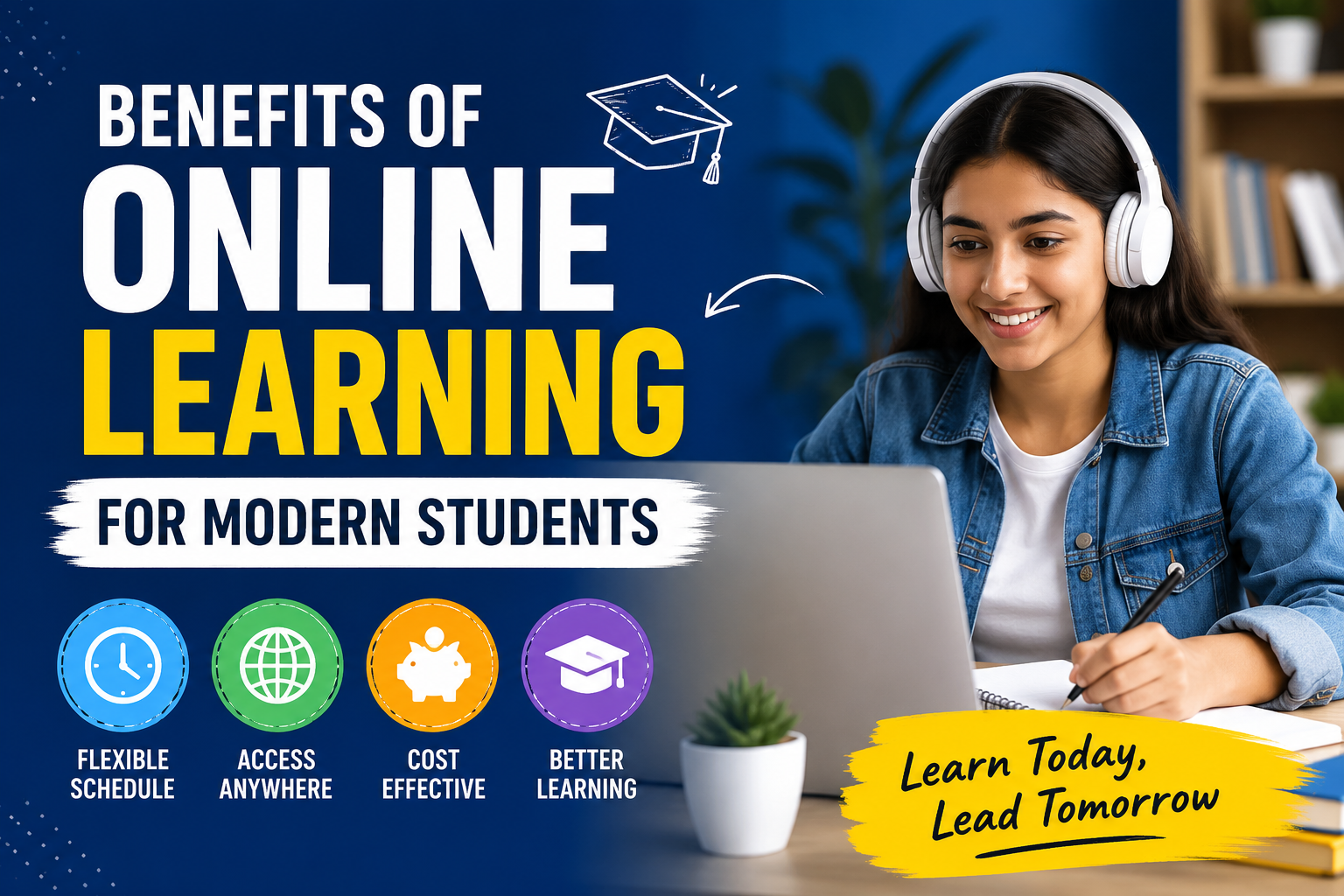
Education is no longer confined to classrooms, blackboards, and fixed schedules. Thanks to the internet and modern technology, students today have more learning opportunities than ever before. Online learning has become a popular choice for millions of learners because it offers flexibility, convenience, and access to valuable educational resources from around the world.
Whether a student wants to improve academic performance, learn a new skill, or prepare for a future career, online learning provides a practical and effective way to achieve those goals. As digital education continues to grow, its benefits are becoming increasingly important for students in the modern world.
Freedom to Learn on Your Schedule
One of the greatest advantages of online learning is the ability to study according to your own timetable. Traditional classes usually require students to attend at specific times, but online courses allow learners to choose when they want to study.
This flexibility helps students balance their education with other responsibilities such as work, family commitments, or personal interests. Learning becomes more manageable when students can create a schedule that suits their lifestyle.
Education Beyond Borders
Online learning has made quality education accessible to students regardless of their location. A learner living in a remote area can now access the same educational content as someone studying in a major city.
Students can participate in courses taught by experienced educators from different countries, opening doors to new ideas, perspectives, and opportunities. This global access helps create a richer learning experience.
Reduced Educational Costs
Traditional education often involves expenses that go beyond tuition fees. Transportation, accommodation, printed textbooks, and campus-related costs can place a financial burden on students.
Online learning reduces many of these expenses. Digital materials are often included in courses, and students can study from home without spending money on daily travel. This makes education more affordable for a wider range of learners.
Learning at a Comfortable Pace
Every student learns differently. Some individuals grasp concepts quickly, while others need more time to understand certain topics. Online learning allows students to progress through lessons at a pace that matches their learning style.
Recorded lectures and downloadable resources make it easy to revisit information whenever necessary. This flexibility can improve understanding and help students retain knowledge more effectively.
Building Important Digital Skills
In today’s technology-driven world, digital skills are essential. Online learning naturally introduces students to various digital tools and platforms used for communication, research, collaboration, and problem-solving.
As students become familiar with these technologies, they develop skills that are valuable in both academic settings and future careers.
Endless Learning Opportunities
One of the most exciting aspects of online education is the variety of available courses. Students are no longer limited to subjects offered by their local schools or colleges.
From computer programming and business management to photography and foreign languages, learners can explore countless topics based on their interests and goals. This encourages personal growth and continuous skill development.
Encourages Independence
Online learning requires students to take responsibility for their education. Without constant supervision, learners must manage their time, stay organized, and remain motivated.
These habits encourage independence and self-discipline—qualities that are highly valuable throughout life. Students who develop these skills often become more confident and capable learners.
A Comfortable Study Environment
Many students find it easier to focus when studying in an environment they choose themselves. Whether it’s a quiet room at home, a library, or a study corner in a café, online learning gives students control over where they learn.
A comfortable environment can increase concentration, reduce stress, and make the learning process more enjoyable.
Access to Current Information
The modern world changes quickly, especially in fields like technology, science, and business. Online courses can be updated regularly to reflect the latest developments and trends.
As a result, students often gain access to more current and relevant information than they might find in traditional printed materials.
Better Communication in the Digital Age
Although online learning takes place virtually, it still encourages meaningful interaction. Students can participate in discussion forums, virtual classrooms, group projects, and live question-and-answer sessions.
These experiences help improve communication and teamwork skills while preparing students for modern workplaces where remote collaboration is increasingly common.
Supports Lifelong Learning
Learning should not stop after graduation. Online education makes it possible for people to continue gaining knowledge throughout their lives.
Whether someone wants to earn a professional certification, switch careers, or simply learn something new for personal growth, online learning provides a flexible pathway to continuous education.
Overcoming Common Challenges
While online learning offers many benefits, it also comes with challenges such as distractions, procrastination, and internet-related issues. However, these obstacles can often be overcome with good planning and self-discipline.
Creating a study schedule, setting clear goals, and maintaining a dedicated learning space can significantly improve the online learning experience.
Conclusion
Online learning has transformed the way students access and experience education. It offers flexibility, affordability, and opportunities that were unimaginable just a few decades ago. More importantly, it empowers students to take control of their learning journey and develop skills that will benefit them throughout their lives.
As technology continues to shape the future, online learning will remain a powerful educational tool. For modern students, it is not simply an alternative to traditional education—it is a pathway to greater knowledge, personal growth, and long-term success.
