Introduction
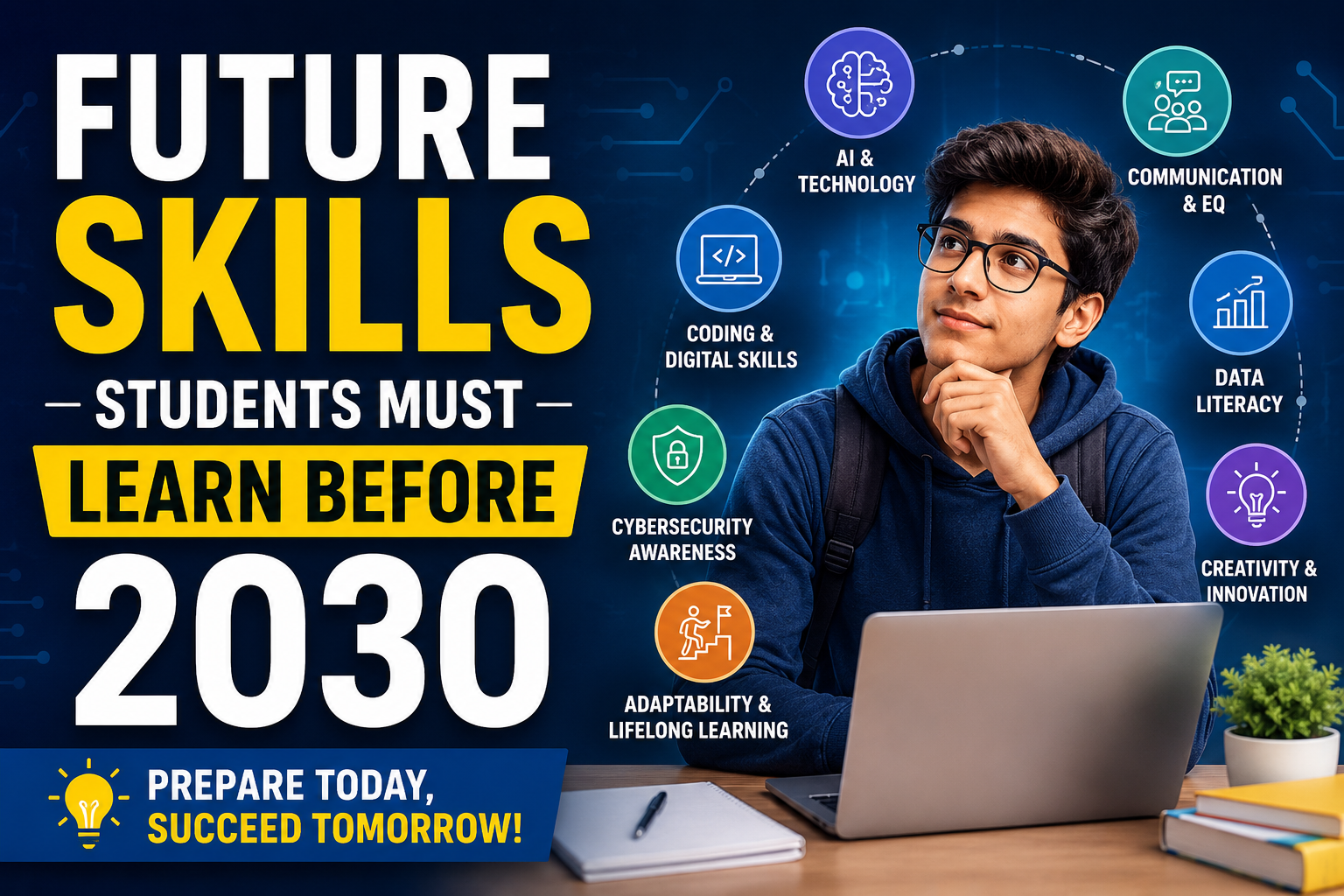
The next few years will bring some of the biggest changes the world has ever seen. Technology is advancing rapidly, artificial intelligence is becoming more powerful, and businesses are constantly adapting to new ways of working. As a result, the skills students need for success are changing as well.
In the past, earning a degree was often enough to secure a stable career. Today, employers want more than academic qualifications. They are searching for individuals who can solve problems, adapt to change, communicate effectively, and work with modern technologies.
Students who begin preparing now will have a clear advantage in the future job market. Learning future-focused skills can help them stay competitive, discover better opportunities, and build successful careers in the years ahead.
Why Future Skills Are More Important Than Ever
The workplace of 2030 will look very different from today’s workplace. Automation will handle many routine tasks, while new industries and career paths will continue to emerge.
Because of these changes, students must focus on developing skills that technology cannot easily replace. Human creativity, adaptability, emotional intelligence, and strategic thinking will become increasingly valuable.
Future skills are not only useful for finding jobs; they also help students become confident learners and effective problem-solvers throughout life.
Artificial Intelligence Awareness
Artificial Intelligence is transforming industries around the world. From education and healthcare to business and marketing, AI tools are becoming a regular part of everyday work.
Students should understand:
- How AI tools function
- The benefits and limitations of AI
- Ethical use of artificial intelligence
- Ways AI can improve productivity
Learning how to work with AI will be far more beneficial than trying to avoid it. Those who understand this technology will have greater opportunities in the future workforce.
Digital Competence
Being comfortable with technology is no longer optional. Digital competence involves using technology effectively, safely, and professionally.
Students should develop skills in:
- Online collaboration
- Cloud-based applications
- Digital communication
- Online research
- Technology troubleshooting
Strong digital skills help students adapt quickly to modern learning and working environments.
Critical Thinking and Smart Decision-Making
The internet provides unlimited access to information, but not all information is reliable. Students need the ability to evaluate facts, identify misinformation, and make informed decisions.
Critical thinking allows students to:
- Analyze situations objectively
- Solve complex problems
- Make logical decisions
- Evaluate different viewpoints
This skill is valuable in every career and remains one of the most sought-after qualities among employers.
Effective Communication
Communication is one of the most powerful skills a student can develop. Whether presenting ideas, writing emails, participating in meetings, or working in teams, communication plays a key role in success.
Important communication skills include:
- Public speaking
- Professional writing
- Active listening
- Persuasive communication
- Online communication
People who communicate clearly often build stronger professional relationships and advance more quickly in their careers.
Emotional Intelligence
Success is not determined by knowledge alone. Emotional intelligence helps people understand their emotions and interact positively with others.
Students with strong emotional intelligence can:
- Manage stress effectively
- Work well in teams
- Resolve conflicts peacefully
- Build strong relationships
- Demonstrate empathy
As workplaces become more collaborative, emotional intelligence will continue to grow in importance.
Basic Coding Knowledge
Coding has become one of the most valuable technical skills of the digital age. Even students who do not plan to become software developers can benefit from understanding programming concepts.
Learning coding can help students:
- Improve logical thinking
- Develop problem-solving abilities
- Understand modern technology
- Access high-demand career opportunities
Languages such as Python and JavaScript are excellent starting points for beginners.
Cybersecurity Skills
The digital world offers many opportunities, but it also presents security risks. Students should learn how to protect themselves and their information online.
Essential cybersecurity skills include:
- Creating strong passwords
- Recognizing online scams
- Protecting personal data
- Safe internet browsing
- Understanding privacy settings
Cybersecurity awareness is becoming a basic requirement for both students and professionals.
Creativity and Innovation
While machines can automate many tasks, creativity remains a uniquely human strength. Creative thinkers often discover new opportunities and develop innovative solutions.
Students can improve creativity by:
- Exploring new ideas
- Working on creative projects
- Learning different subjects
- Solving challenges in unique ways
- Practicing brainstorming techniques
Innovation will continue driving progress across every industry.
Adaptability and Lifelong Learning
One of the most important future skills is the ability to learn continuously. Technology changes quickly, and new knowledge becomes essential throughout a person’s career.
Students who embrace lifelong learning can:
- Stay relevant in their fields
- Adapt to workplace changes
- Learn new technologies faster
- Seize emerging opportunities
The willingness to learn may become one of the most valuable qualities of the future workforce.
Financial Literacy
Many young people enter adulthood without understanding how money works. Financial literacy helps students make smart decisions that support long-term success.
Important financial topics include:
- Budgeting
- Saving money
- Investing basics
- Debt management
- Financial planning
Developing financial knowledge early can lead to greater stability and independence later in life.
Leadership Skills
Leadership is not only for managers or business owners. It is the ability to inspire, guide, and support others toward achieving common goals.
Students can build leadership skills through:
- Team projects
- Student organizations
- Volunteer activities
- Community involvement
Strong leaders are valuable in every profession and industry.
Entrepreneurial Thinking
The future will reward individuals who can identify problems and create solutions. Entrepreneurial thinking encourages creativity, initiative, and innovation.
Students who develop this mindset learn how to:
- Recognize opportunities
- Take calculated risks
- Solve real-world problems
- Create value for others
These abilities can be useful whether someone starts a business or works for an organization.
Global Awareness
Modern workplaces connect people from different countries and cultures. Understanding global issues and cultural differences helps students communicate more effectively in diverse environments.
Students can improve global awareness by:
- Following international news
- Learning foreign languages
- Exploring different cultures
- Participating in global communities
This skill prepares students for a more connected world.
Sustainability Knowledge
Environmental responsibility is becoming a major focus for governments and businesses worldwide. Future professionals will need to understand sustainable practices and environmental challenges.
Learning about sustainability can help students contribute to:
- Green innovation
- Environmental protection
- Resource conservation
- Sustainable development
Many future careers will involve creating solutions for environmental challenges.
How Students Can Prepare Today
Developing future skills does not require expensive programs or advanced degrees. Students can start by taking small steps every day.
Some effective strategies include:
- Taking online courses
- Reading educational articles
- Learning new technologies
- Building personal projects
- Joining learning communities
- Seeking mentorship
- Practicing problem-solving regularly
Consistency is the key to long-term growth and success.
Conclusion
The future belongs to individuals who are willing to learn, adapt, and embrace change. Academic knowledge remains important, but practical skills will play an equally important role in determining career success.
By developing skills such as artificial intelligence awareness, communication, critical thinking, emotional intelligence, coding, financial literacy, and adaptability, students can prepare themselves for the opportunities of 2030 and beyond.
The best time to start building these skills is today. Every new skill learned now can become a powerful advantage in the future.
