Introduction
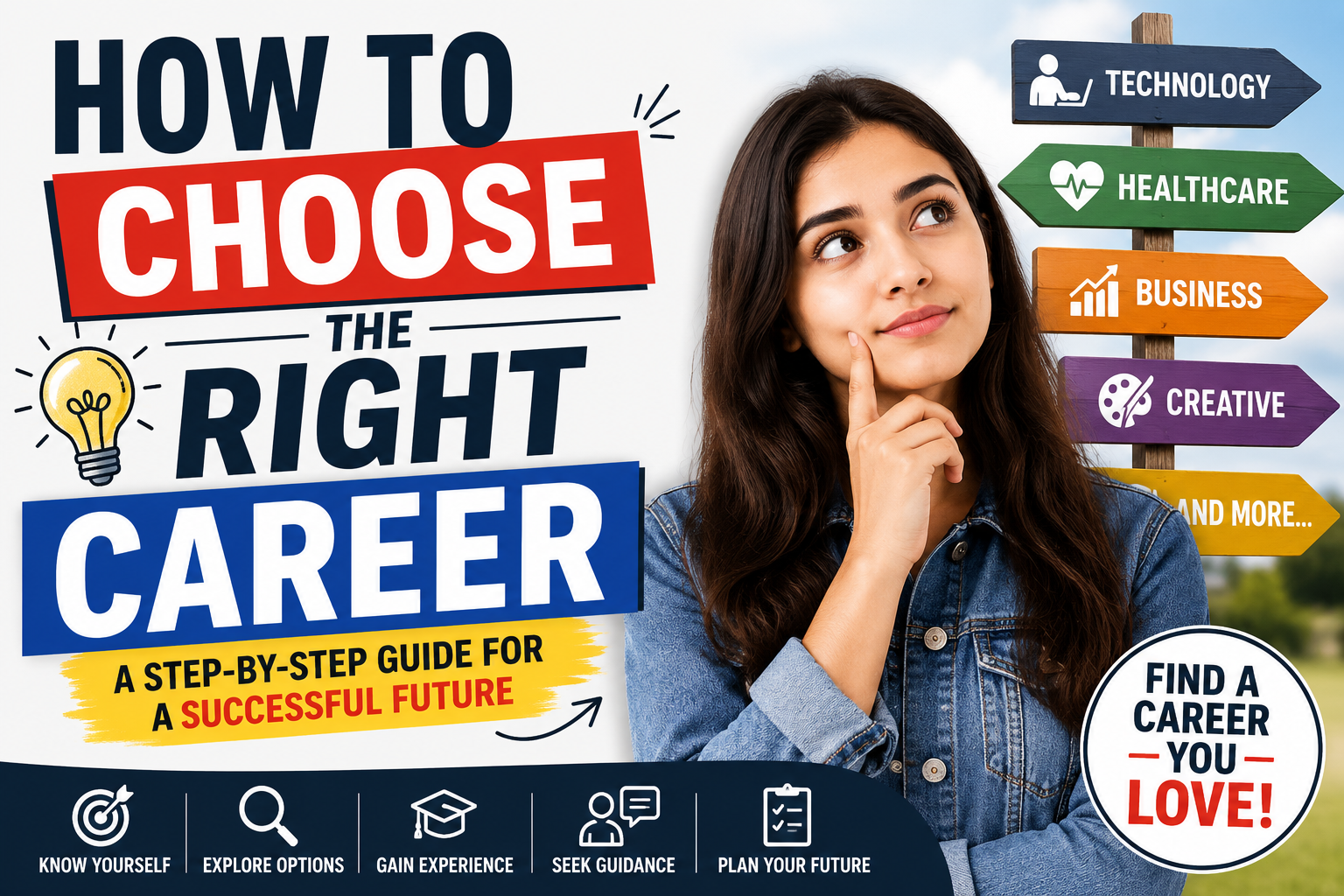
Choosing a career is one of the most important decisions you will ever make. The career path you select can influence your lifestyle, income, personal growth, and overall happiness. However, many students feel confused when they have to decide what they want to do after school or college. With hundreds of career options available today, making the right choice can seem overwhelming.
The truth is that there is no single “perfect” career for everyone. The best career is the one that matches your interests, skills, values, and future goals. By understanding yourself and researching your options carefully, you can make a decision that leads to long-term success and satisfaction.
Why Career Selection Matters
A career is more than just a source of income. It becomes a significant part of your daily life. Most people spend decades working, which is why choosing a profession that suits you is so important.
A well-chosen career can offer:
- Personal satisfaction
- Better earning opportunities
- Career growth and stability
- Improved work-life balance
- Higher confidence and motivation
On the other hand, choosing a career without proper planning may result in stress, boredom, and limited opportunities.
Start with Self-Assessment
Before exploring different professions, take time to understand yourself. Self-assessment helps you identify what you enjoy and what you are naturally good at.
Ask yourself:
- What subjects do I enjoy studying?
- What activities make me feel excited?
- What are my strongest skills?
- What type of work environment do I prefer?
Your answers can provide valuable direction when selecting a career path.
For example, if you enjoy solving technical problems, a career in information technology might suit you. If you enjoy helping people, healthcare or teaching may be a better fit.
Identify Your Interests
People tend to perform better in careers they genuinely enjoy. Working in a field that interests you can keep you motivated even during difficult times.
Some common interest areas include:
Technology
Suitable careers:
- Software Development
- Cybersecurity
- Artificial Intelligence
- Data Science
Creativity
Suitable careers:
- Graphic Design
- Content Writing
- Video Editing
- Digital Marketing
Business and Management
Suitable careers:
- Entrepreneurship
- Finance
- Human Resources
- Project Management
Helping Others
Suitable careers:
- Teaching
- Nursing
- Counseling
- Social Work
Understanding your interests can significantly narrow down your career options.
Recognize Your Skills and Strengths
Your natural abilities are often indicators of careers where you can excel.
Consider whether you are strong in:
Communication
- Public Speaking
- Negotiation
- Teaching
- Customer Relations
Analytical Thinking
- Problem Solving
- Mathematics
- Research
- Data Analysis
Leadership
- Team Management
- Decision Making
- Strategic Planning
Choosing a career that aligns with your strengths increases the likelihood of success and job satisfaction.
Research Different Career Opportunities
Many students only know about traditional careers such as medicine, engineering, and teaching. However, modern industries offer countless opportunities that did not exist a few years ago.
Some growing career fields include:
- Artificial Intelligence
- Cybersecurity
- Cloud Computing
- Digital Marketing
- E-Commerce
- Software Engineering
- Data Analytics
- Renewable Energy
Spend time researching job roles, responsibilities, salaries, and future demand before making a decision.
Consider Future Job Market Trends
The job market changes rapidly due to technological advancements and global developments. Choosing a career with strong future demand can provide greater security and growth opportunities.
Experts predict that careers related to technology, healthcare, and digital services will continue to grow in the coming years.
When evaluating a profession, ask yourself:
- Will this field remain relevant in the future?
- Are companies actively hiring professionals in this industry?
- Does the career offer opportunities for advancement?
Future-focused thinking can help you make a smarter decision.
Learn About Educational Requirements
Every profession requires a different level of education and training. Some careers require university degrees, while others focus more on practical skills and certifications.
Examples include:
| Career | Typical Qualification |
|---|---|
| Software Developer | Programming Skills and Certifications |
| Doctor | Medical Degree |
| Accountant | Finance Qualification |
| Graphic Designer | Portfolio and Design Skills |
| Digital Marketer | Certifications and Experience |
Understanding these requirements helps you create a realistic plan for achieving your goals.
Gain Practical Experience
Reading about a career is useful, but experiencing it firsthand is even better.
Ways to gain experience include:
- Internships
- Freelance work
- Volunteer programs
- Personal projects
- Part-time jobs
Practical experience allows you to see whether a profession matches your expectations before committing to it long-term.
Seek Advice from Experienced Professionals
People already working in a particular field can provide valuable insights that you may not find online.
Ask professionals questions such as:
- What does a typical workday look like?
- What skills are most important?
- What challenges should beginners expect?
- What advice would you give someone entering this field?
Their guidance can help you make a more informed decision.
Don’t Choose a Career Based Only on Salary
While income is an important factor, it should not be the only reason for choosing a profession.
A high-paying job may not bring happiness if you dislike the work. Similarly, a career you enjoy can become financially rewarding when you develop expertise and experience.
The ideal choice is a career that combines:
- Personal interest
- Strong skills
- Growth opportunities
- Financial stability
Balancing these factors often leads to long-term success.
Create a Career Action Plan
Once you have selected a career direction, create a step-by-step roadmap.
Short-Term Goals
- Learn the basics
- Enroll in relevant courses
- Build foundational skills
Medium-Term Goals
- Earn certifications
- Complete internships
- Build a portfolio
Long-Term Goals
- Secure professional employment
- Develop specialized expertise
- Advance to leadership positions
A structured plan makes career goals easier to achieve.
Common Mistakes to Avoid
Many people make poor career choices because they fail to research properly.
Avoid these common mistakes:
- Following friends without considering your own interests
- Choosing a profession solely for money
- Ignoring future industry trends
- Underestimating the importance of skill development
- Making rushed decisions under family or social pressure
Taking time to evaluate your options carefully can prevent regret later.
Conclusion
Choosing the right career is a process that requires self-discovery, research, and careful planning. There is no need to rush. Focus on understanding your interests, strengths, and long-term goals while exploring the opportunities available in today’s evolving job market.
Remember, a successful career is not just about earning a good salary. It is about finding work that challenges you, helps you grow, and gives you a sense of purpose. When you combine passion with skills and continuous learning, you create a strong foundation for a rewarding future.
