Introduction
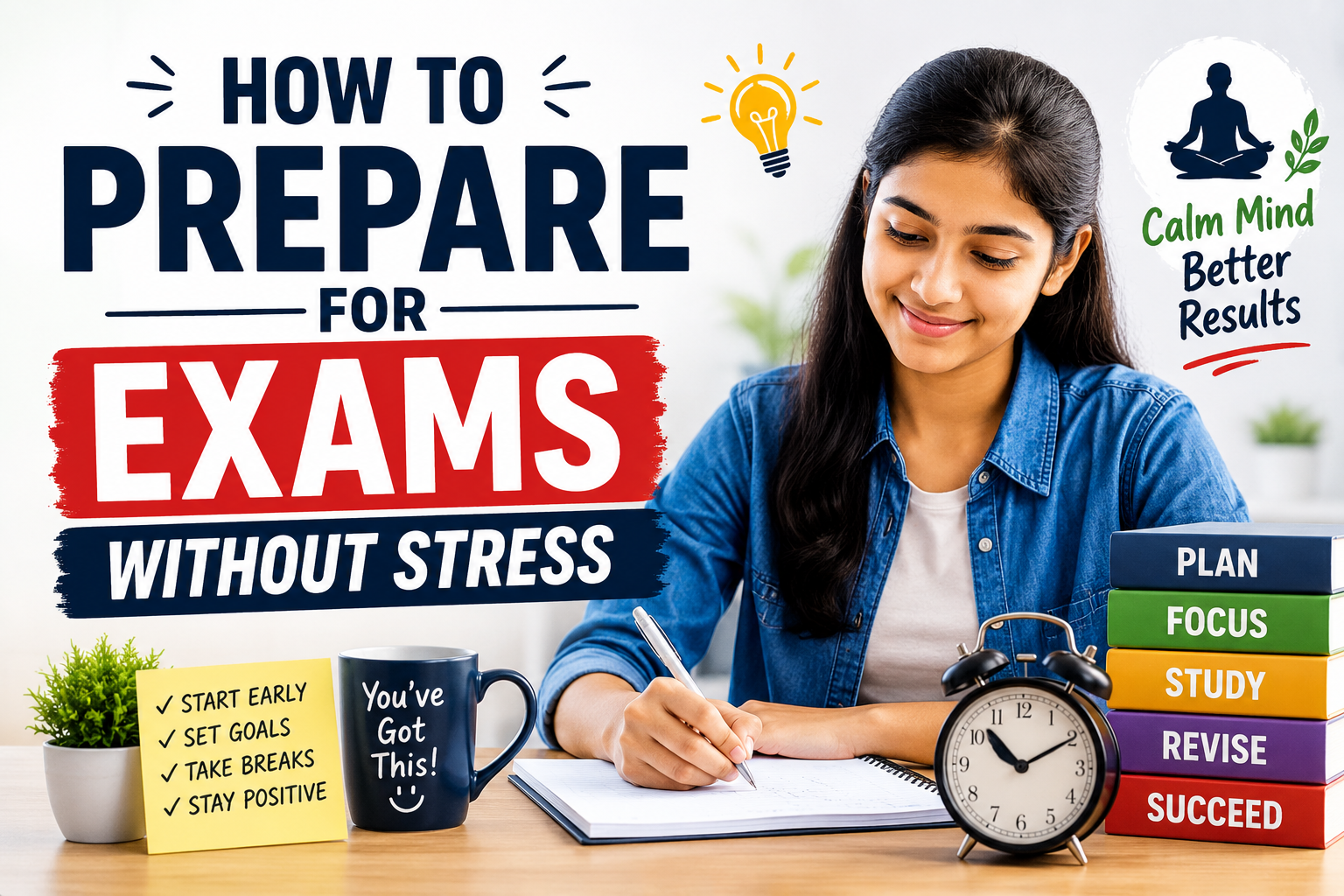
Exams are often seen as one of the most stressful experiences in a student’s life. As the exam date gets closer, many students begin to feel anxious about completing the syllabus, remembering important information, and achieving good grades. However, stress is not a necessary part of exam preparation. In fact, excessive stress can make studying less effective and reduce confidence. By developing good study habits, maintaining a healthy routine, and managing time wisely, students can prepare for exams in a calm and organized manner.
Begin Preparation Early
A common reason students feel stressed before exams is that they start studying too late. When there is only a limited amount of time left, even simple tasks can seem overwhelming. Starting early allows students to learn gradually and avoid the pressure of rushing through the syllabus.
Preparing in advance also provides enough time to review difficult topics and strengthen weak areas. Instead of spending long hours studying at the last minute, students can build knowledge steadily over time. This approach not only reduces stress but also improves understanding and retention.
Set Realistic Goals
Many students make the mistake of setting unrealistic expectations for themselves. Trying to study an entire subject in one day can lead to disappointment and frustration. A better approach is to divide large tasks into smaller, achievable goals.
For example, completing one chapter, solving a set of practice questions, or reviewing class notes can be daily targets. Achieving these small goals creates a sense of progress and keeps motivation high throughout the preparation period.
Find a Study Method That Works for You
Every student learns differently. Some students understand concepts better by reading, while others prefer writing notes, watching educational videos, or discussing topics with classmates. Finding a study method that matches one’s learning style can make preparation more enjoyable and effective.
Rather than simply reading textbooks repeatedly, students should actively engage with the material. Making summaries, creating diagrams, and solving practice papers help strengthen understanding and improve memory. Active learning keeps the mind focused and reduces boredom.
Take Care of Your Well-Being
Academic success is closely connected to physical and mental health. During exam season, students often sacrifice sleep and ignore healthy habits in an attempt to study more. Unfortunately, this can have the opposite effect.
A well-rested mind learns more efficiently than a tired one. Adequate sleep improves concentration, memory, and problem-solving skills. Similarly, healthy meals and regular exercise provide the energy needed to stay focused. Taking care of the body is just as important as studying the syllabus.
Do Not Underestimate the Power of Breaks
Many students believe that studying for long, uninterrupted hours is the key to success. In reality, the brain needs regular breaks to stay productive. Continuous studying can cause mental exhaustion and make it harder to absorb information.
Short breaks between study sessions allow students to relax and recharge. Activities such as walking, stretching, or listening to music can refresh the mind and improve concentration. A balanced study routine is often more productive than marathon study sessions.
Avoid Comparing Yourself with Others
Comparison is a major source of stress for many students. Seeing classmates complete more topics or score higher marks can create feelings of insecurity. However, every student has different strengths, weaknesses, and learning speeds.
Instead of focusing on others, students should concentrate on their own progress. Improvement, no matter how small, is a sign of success. Building confidence through personal growth is much more valuable than competing with others.
Stay Positive During Exams
Even after thorough preparation, it is natural to feel nervous before an exam. The key is not to eliminate nervousness completely but to prevent it from becoming overwhelming. Positive thinking can help students remain calm and focused.
Before entering the examination hall, students should remind themselves of the effort they have put into their preparation. Confidence comes from knowing that they have done their best. Staying calm allows the mind to think clearly and perform effectively.
Conclusion
Preparing for exams without stress is possible when students approach their studies with planning, balance, and confidence. Starting early, setting realistic goals, using effective study techniques, and maintaining a healthy lifestyle can make a significant difference. Exams should be viewed as an opportunity to demonstrate learning rather than a source of fear. With the right mindset and consistent effort, students can achieve success while maintaining their peace of mind.
